
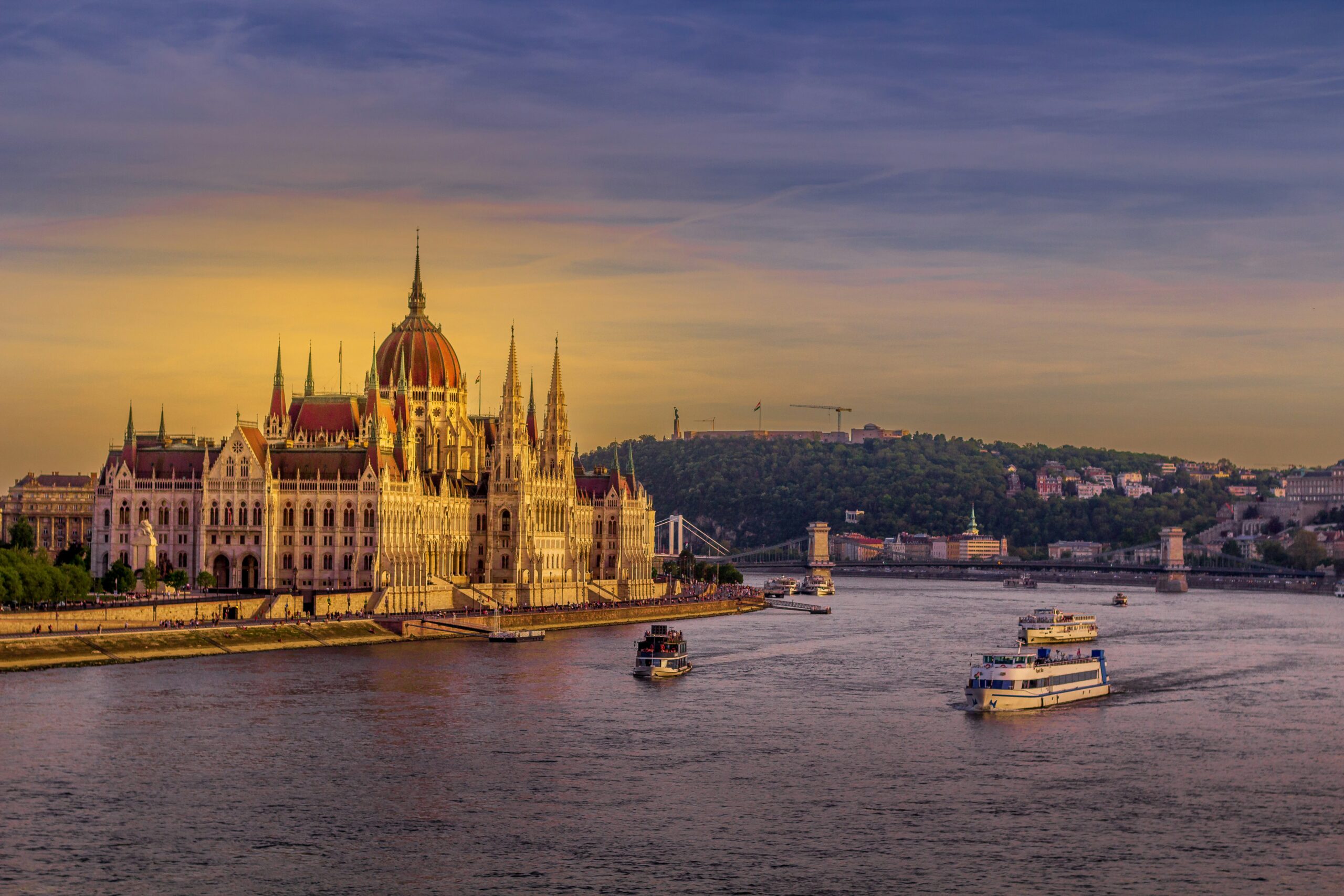
You have a ticket to the Champions League Final. You’re going to Budapest. And whether you’re following your team to the biggest night of their season or going as a neutral who happened to be faster on the ticket website than most people, you’ve got a city to figure out. A city that, as it turns out, is an amazing backdrop for 90 minutes of football and a sore throat.
That’s the thing about Budapest. Most people who end up there for a big event leave wondering why they hadn’t come sooner, on purpose, for longer. It’s the kind of place that doesn’t announce itself. You arrive, you find the thermal baths and the ruin bars and the lángos stands, and somewhere around day two you quietly start rearranging your opinions about European cities. Paris has the reputation. Budapest has the reality.
The City You’re Actually Visiting
Budapest in late May runs to around 22–25°C. Warm enough to sit outside, cool enough that you won’t spend the afternoon hiding under air conditioning. The city is split down the middle by the Danube: Buda on the hilly west side, Pest on the flat eastern side where most of the eating, drinking, and staying up too late happens. The two were technically separate cities until 1873, which explains why they feel slightly different in character. Buda is where you go to look at things. Pest is where you go when you’ve finished looking.
The centre is compact and walkable. Public transport (metro, tram & bus) is excellent and genuinely cheap by Western European standards. A single ticket costs 450 HUF, which is about £1.10. A 24-hour travel card is 3,500 HUF, roughly £8.50. Compare that to a Zone 1 Tube day pass in London and try not to think about it too hard.
The currency is the Hungarian Forint (HUF). Cards are widely accepted in the city centre, but carry some cash for market stalls, street food, and tipping. Ten to fifteen percent in restaurants is standard.
What Budapest Actually Does Well
The Thermal Baths (Go. Non-Negotiable.)
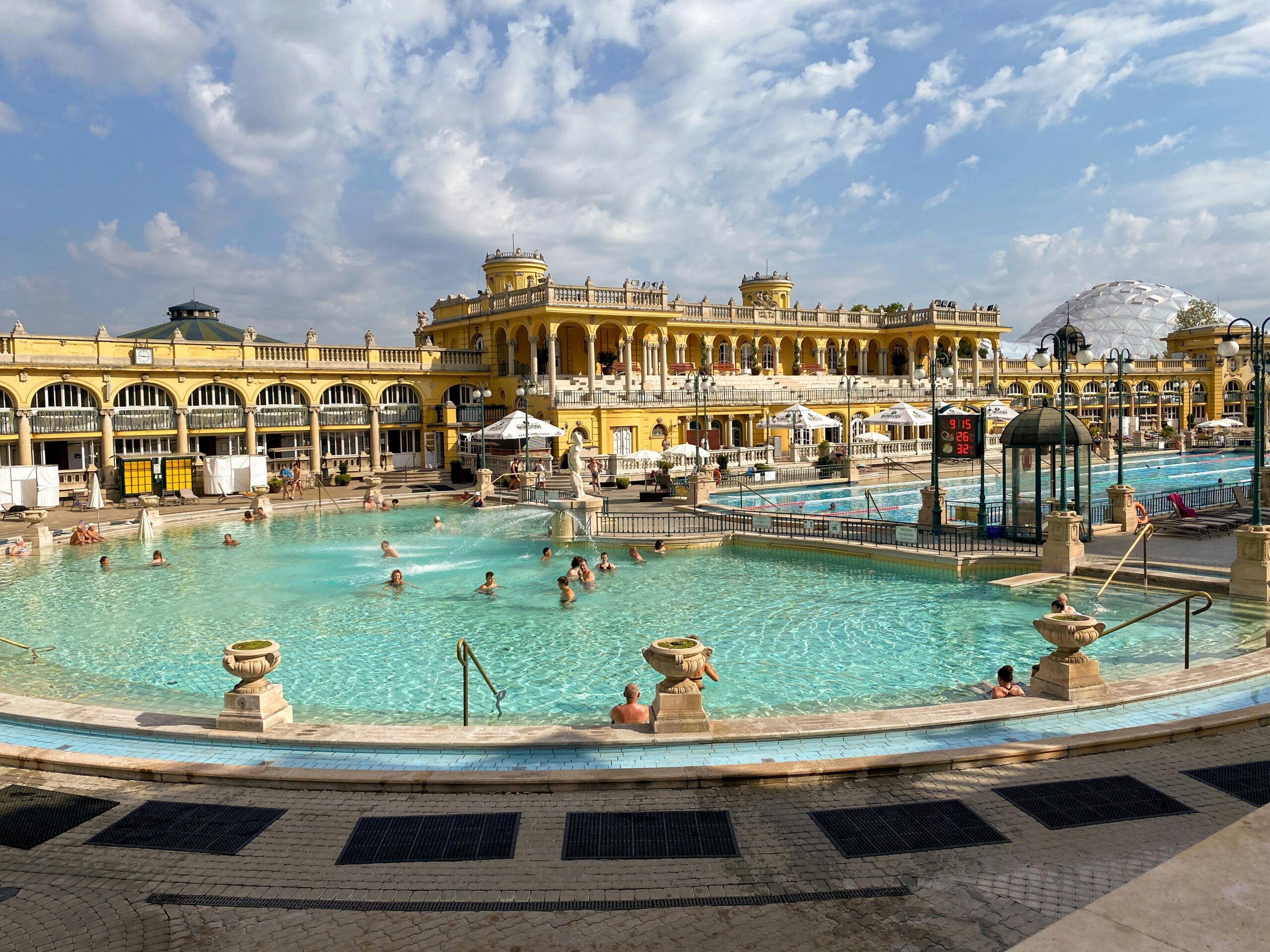
The Ottomans occupied Budapest for 150 years and the main thing they left behind was a culture of sitting in hot water with strangers. That sounds like a criticism. It is not. The thermal baths are genuinely one of the best things you can do in any European city, and they’re especially useful when you’re about to spend an evening in a 67,000-seat stadium followed by whatever comes after.
Széchenyi is the one to go to. It’s a vast, yellow, neo-baroque complex in City Park, with outdoor pools the size of small lakes and indoor pools that feel like someone decided a Habsburg palace would be improved by filling it with hot water. They were right. There is also a colony of bees living in the roof, which the management knows about, considers character rather than a problem, and which has been quietly producing honey in one of Budapest’s most famous buildings for years. This is, depending on your disposition, either charming or alarming. Either way, the baths are excellent.
A weekday ticket runs 11,900 HUF (about £30); weekends are 13,500 HUF (£34). The skip-the-line option at 15,200–17,800 HUF (£38–45) is worth it if you’re on a tight schedule. Book online in advance. Go in the morning, before the tour groups arrive, and you’ll have an experience that no amount of expensive hotel bathroom products can replicate.
If you want to take the thermal bath concept somewhere more unusual, Széchenyi also runs its own beer spa — a soak in a private wooden tub filled with warm beer wort, hops, and yeast, with unlimited craft beer on tap while you soak. Before you click away: this is not a novelty. It’s a legitimate Central European wellness tradition with genuine skin benefits, and it is, at minimum, the most efficient afternoon you’ll spend in any city. Entry runs €69 per person for the beer soak alone, or €111 for the beer spa combined with a fast-track Széchenyi ticket and a cabin. Book through GetYourGuide — details in the Plan Your Trip section below, and ideally not at the same time as 67,000 football fans are trying to book the same thing.
One note: Gellért Baths (the other famous option) closed in October 2025 for a €51 million renovation and won’t reopen until at least 2028 — and the outdoor areas may not return until 2029. Don’t bother looking it up. Go to Széchenyi.
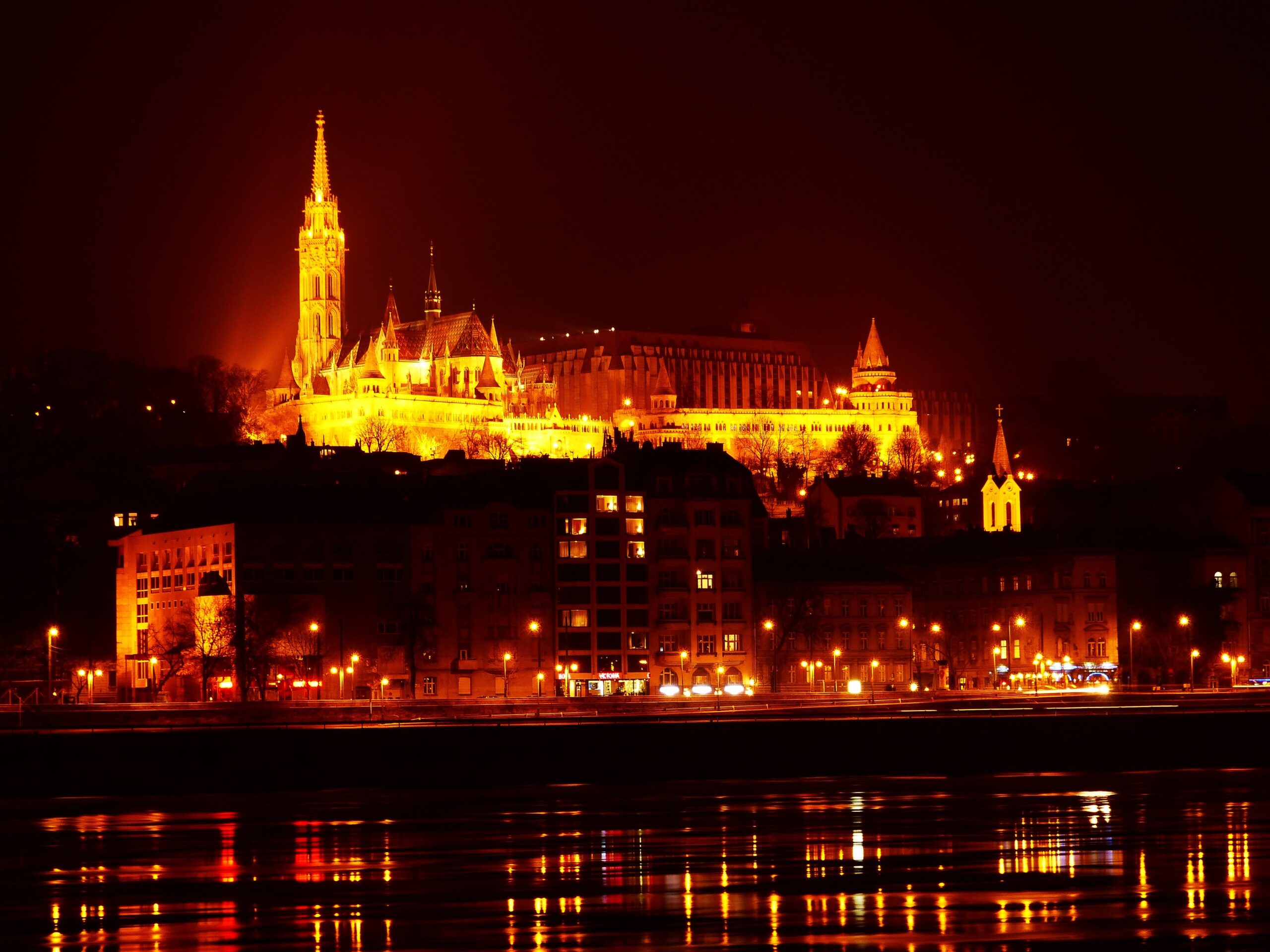
Fisherman’s Bastion & Buda Castle
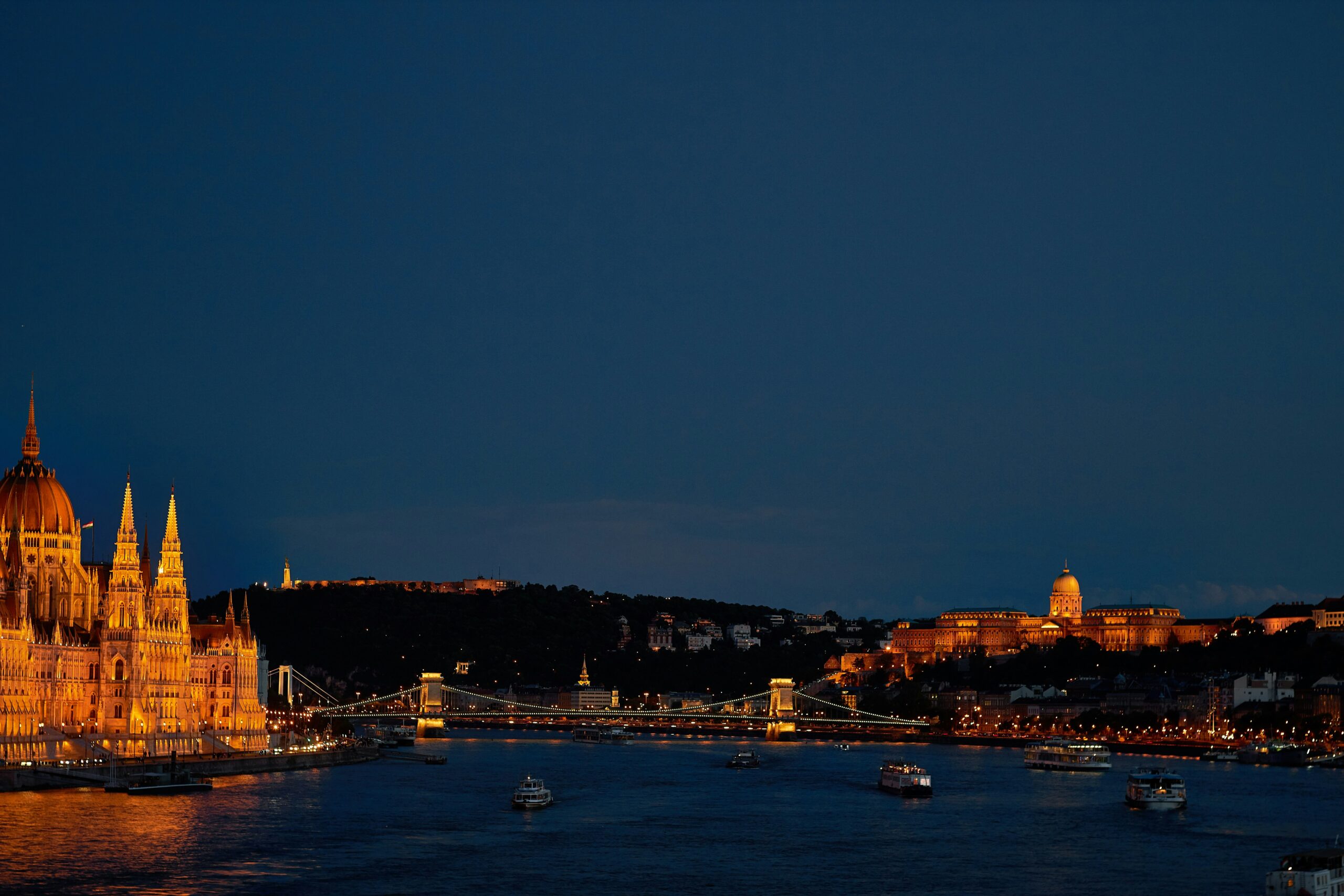
On the Buda side, perched above the river, Fisherman’s Bastion is a neo-Romanesque terrace with seven towers representing the seven Magyar tribes who settled Hungary in 896. The Magyar tribes, for anyone who didn’t take Eastern European history at school (fair enough), were the nomadic Hungarian ancestors who rode west from the steppes and decided the Carpathian Basin looked like a reasonable place to stay. They weren’t wrong. The view from those towers across the Danube to the Parliament building is one of those panoramas that genuinely earns its reputation.
You can walk the courtyards and terraces for free, or pay 1,700 HUF (£4.25) for access to the towers between 09:00 and 21:00. After 21:00 in summer it’s free again, which makes it an obvious post-dinner stop. Buda Castle is next door, a proper royal palace complex now housing the National Gallery and Budapest History Museum. Entry to the gallery runs 4,800 HUF (about £12). If your schedule is tight, the courtyards and gardens are free and worth the walk.
Ruin Bars: Budapest’s Best Idea
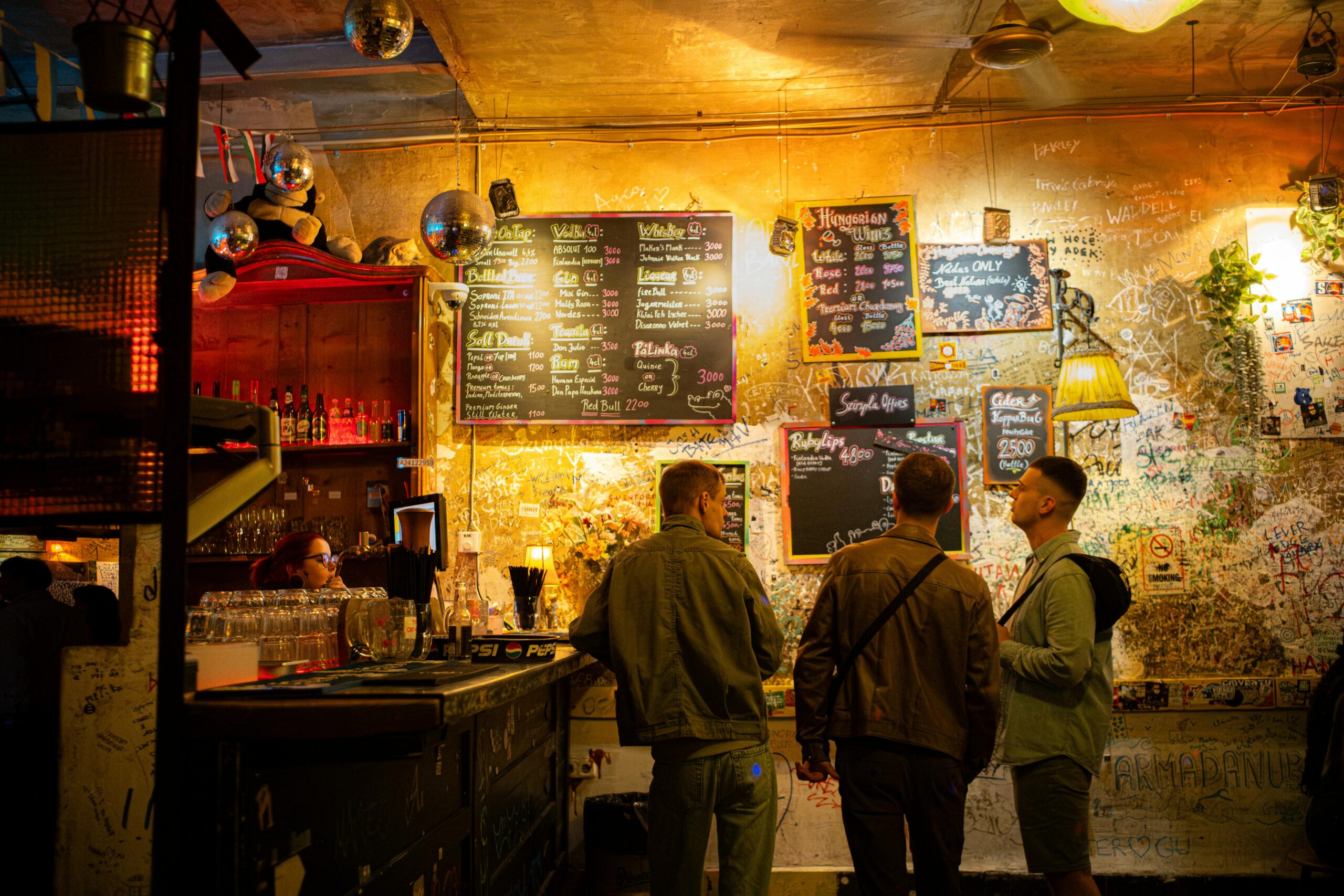
In the early 2000s, someone looked at the abandoned buildings in Budapest’s old Jewish Quarter and thought: what if we just put a bar in here? Not a clean, designed, Instagram-friendly bar. A bar with mismatched furniture, fairy lights strung between crumbling walls, eight different rooms, and a courtyard that somehow fits 400 people.
Szimpla Kert is the original. Open from noon, free entry, craft beers from around €5, and a Sunday farmers’ market in the morning if you’re in the mood for jam and flea market vinyl. It is slightly touristy. It is also genuinely brilliant. The Instant-Fogas complex next door is six floors and 18 bars, which reads less like a description and more like a challenge. Both are in the Jewish Quarter, walkable from most central hotels.
These are not places you nip into for one drink. Plan accordingly.
The Great Market Hall
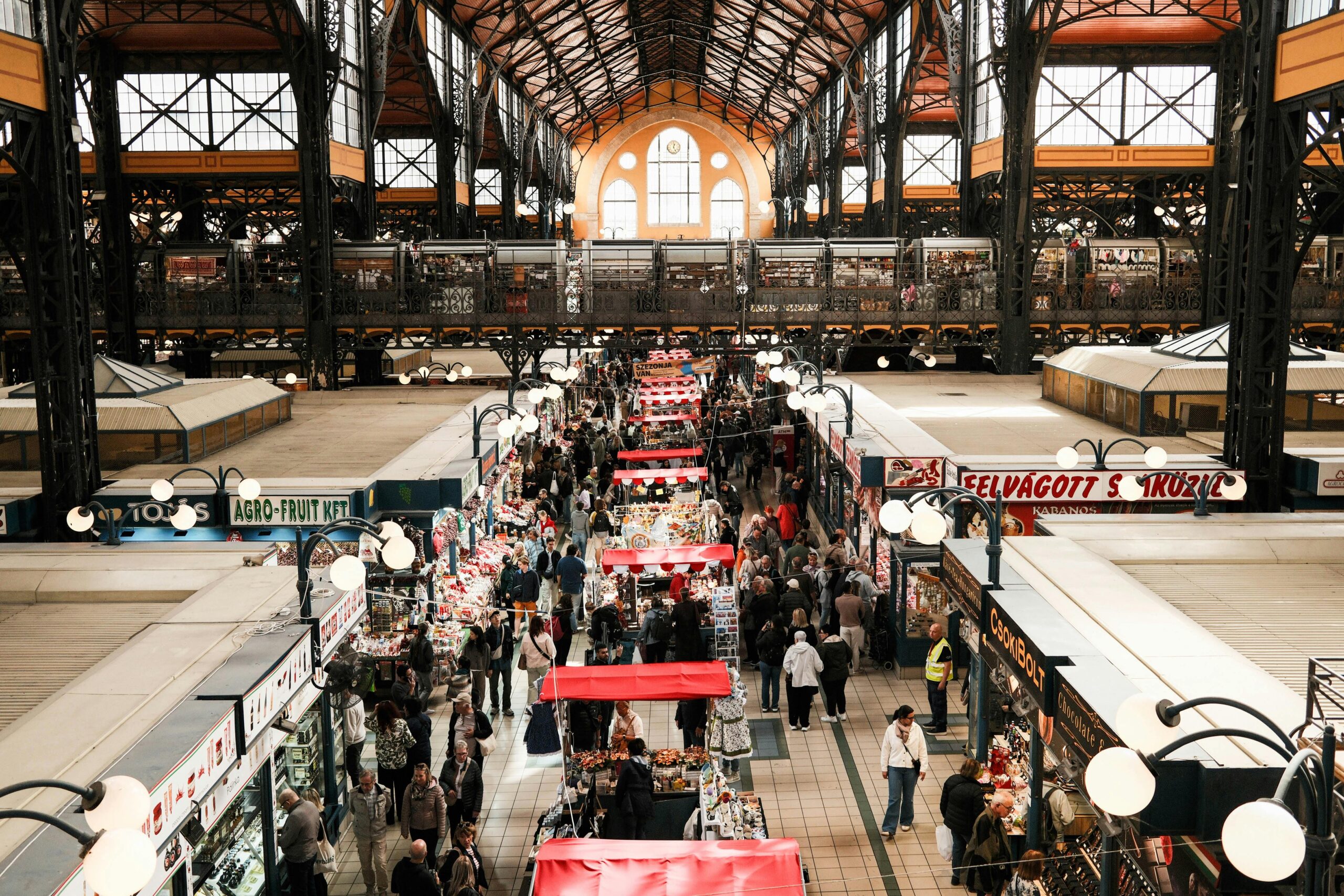
The main market at the foot of Liberty Bridge is where the city actually shops. Ground floor: fresh produce, meat, spice, paprika by the kilo. Basement: fish and pickles. Upper balcony: street food stalls, lángos, and souvenirs in descending order of authenticity.
Lángos, for the uninitiated: deep-fried dough topped with sour cream and cheese, 1,000–1,500 HUF (£2.50–4). It is the correct breakfast, the correct mid-morning snack, and the correct answer to most questions. Ordering one well-topped and eating it standing up at a market stall is not optional. Go between 09:00 and 11:00 for the full, properly-stocked experience. Go at noon and you’ll spend half your time in a queue with everyone else who had the same idea.
Eating & Drinking
Gulyás (goulash) is technically a soup, not a stew. Hungarian restaurants will correct you on this with varying degrees of patience. It’s beef, root vegetables, paprika, and exactly the kind of thing you want in a proper sit-down lunch. A two-course napi menü (daily lunch special) at a local restaurant runs 1,500–3,000 HUF (£4–8) and is consistently the best value meal in the city. Use it every day you’re there.
Pálinka is Hungary’s fruit brandy: 40–70% ABV, served neat, made from plums or apricots depending on what the distillery had going that year. It’s offered at the end of most traditional meals and described by every Hungarian you meet as a digestive. Whether it qualifies as medicine or just as a very confident drink is perhaps a question better settled the morning after. Try it once. Respect it.
Mid-range dinner in Budapest runs £10–20 per head. Michelin-starred restaurants come in at £40–80, which by London standards is practically a rounding error. The city punches well above its price point on food quality.
Getting to Puskás Aréna
The stadium is in the 14th District, about 3 km from the city centre. Take the M2 metro (the red line) to Puskás Ferenc Stadion station and it’s a four-minute walk from the exit. Do not drive. There are approximately 500 parking spaces for a 67,215-capacity stadium. Budapest’s transport planners were being optimistic about something, and it wasn’t the car park.
The M2 runs until around midnight, with extended services expected on Final night. Check BKK (Budapest’s public transport authority, the people who actually know) as the date approaches. Leave more time than you think you need. The metro will be busy in a way that reframes your understanding of the word “busy.”
Tickets: the UEFA application window closed in March 2026. If you don’t have one yet, the secondary market is the route: SeatPick, StubHub, and similar. Official Fans First pricing started from €70 (£60) for Category 3; secondary market will be higher. If Arsenal reach the final, they’ll receive an allocation of around 17,200 tickets distributed through the club directly. Worth checking the Arsenal website if that’s your situation.
Getting There & Around
Flights: Budapest Ferenc Liszt International Airport (BUD) is served by most UK carriers: British Airways, Ryanair, Wizz Air, easyJet. From London, you’re looking at roughly two and a half hours in the air. Flights for late May are not cheap right now. Fuel costs have been pushing fares up across European routes, and a Champions League Final weekend in the destination city means demand is only going one direction. Book early, shop around, and use Google Flights’ price tracking if you haven’t already.
Airport to city: The 100E Airport Express Bus runs directly from the terminal to Deák Ferenc tér in the city centre. It takes 25–40 minutes and costs 2,500 HUF (£6.25). A taxi or Bolt (Budapest’s Uber equivalent) runs 8,000–12,000 HUF (£20–30) depending on traffic. Solo, the bus wins on price and simplicity. Two or three of you travelling together and the taxi starts to make sense on the same maths, bags included.
Around the city: Metro, tram, and bus cover everything you’ll need. Single tickets are 450 HUF (£1.10); 24-hour passes are 3,500 HUF (£8.50). The Budapest Card covers unlimited public transport and discounts at major attractions. Seventy-two hours costs 27,990 HUF (£70), which earns its keep if you’re there for three or more days and actually intend to use it rather than just feeling organised.
Plan Your Trip
Budapest rewards having a good guide. The city is layered enough that knowing what you’re looking at (and what the building used to be before it became a bar, or a spa, or a gallery) genuinely changes the experience. Thermal bath tours that include access and local orientation, Buda Castle walks, Danube evening cruises, Jewish Quarter ruin bar crawls. All worth doing.
For tours and experiences curated for this post, including thermal bath entry, city walking tours, river cruises, and UCL Final week programmes, browse The Travel Guru’s Budapest guide on Viator. For the thermal baths (including the beer spa), Jewish Quarter tours, and evening programmes, GetYourGuide Budapest has the full spread. Book in advance for the Final weekend. Availability will be tight.
If you book through our links, we earn a small commission at no extra cost to you. Every penny goes back into keeping this going. Seems like a fair deal.
One More Thing
The Champions League Final lasts 90 minutes, possibly more if it goes the way finals sometimes do. Budapest will last as long as you let it.
Most people who come for the match leave with a list of things they didn’t have time to do: the Fisherman’s Bastion at sunset, the second ruin bar, the sit-down gulyás, one more morning in the baths. Add a day either side of the final if you can manage it. This is not a city that gives everything up in an afternoon. It earns its reputation quietly, without making a fuss, and then turns out to have been one of the best trips you ever took.
Book it around the football. Stay for everything else.
Planning more football travel this summer? Our Nashville travel guide and New York City travel guide cover Sunderland’s pre-season US tour fixtures.
Leave a Reply