
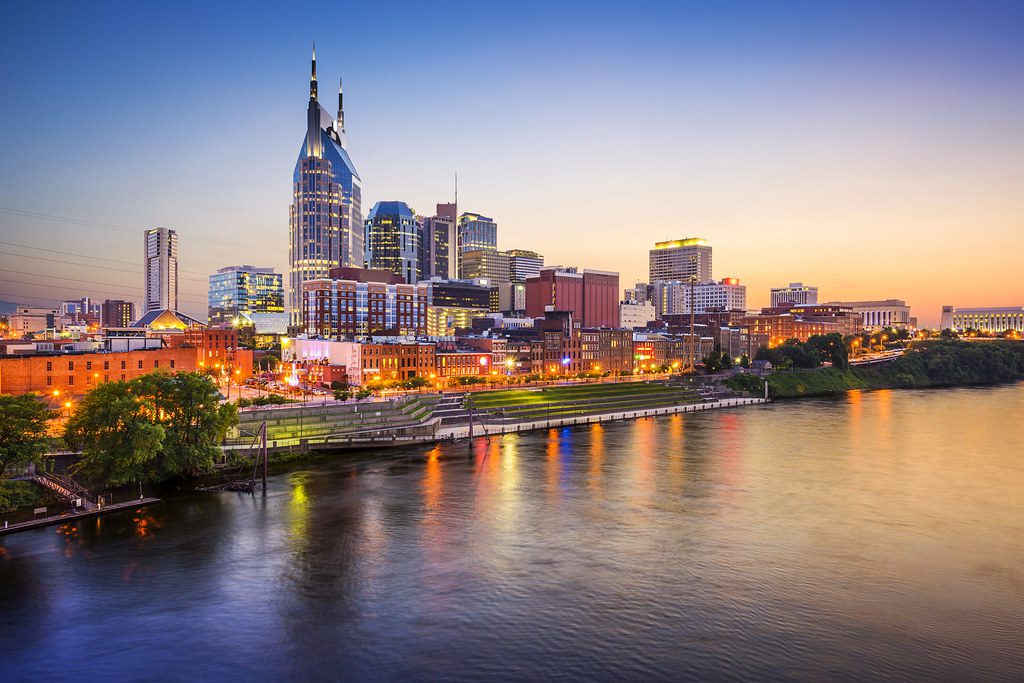
Somewhere around the forty-thousandth rendition of “Wise Men Say,” arms linked, the kind of full-throated devotion that only makes sense if you’ve waited eight years to sing it in the Premier League again, someone in the Mackem end is going to realise something. The song they’re belting out was built in this city. Not this stadium, not this street, but Nashville. The place where Elvis recorded over two hundred songs across thirteen years, where a nineteen-year-old from Tupelo walked onto the Grand Ole Opry stage in 1954 and played rockabilly to a country crowd who didn’t quite know what to make of him. Mackems have been singing “Can’t Help Falling in Love” for years without ever needing a reason beyond the obvious one. But on 25 July 2026, when they walk into GEODIS Park to face Liverpool in the Summer Soccer Series, they’ll be singing it ten minutes from the studio where the man who made it famous recorded half his catalogue.
That’s the sort of coincidence Nashville specialises in. The city collects them.
This Nashville travel guide is for anyone making the trip. Sunderland fan, Liverpool fan, or someone who just wants to know why thirty thousand people are flying to Tennessee for a pre-season friendly. The short answer: because the city is worth the airfare on its own. The football is the excuse. Nashville is the reason you stay.
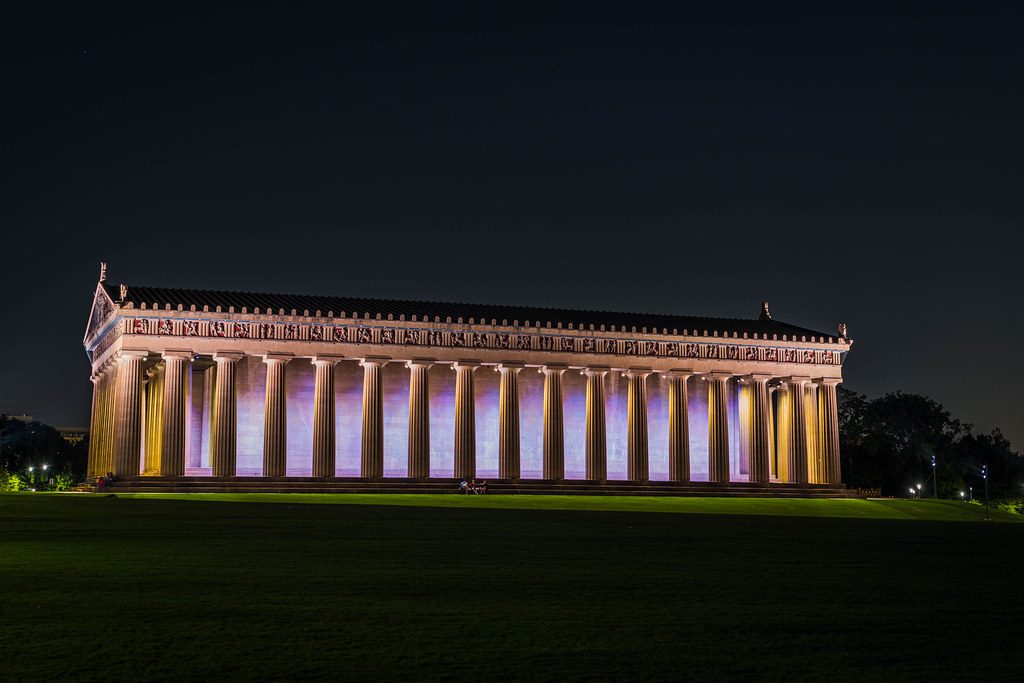
A Full-Scale Parthenon in Tennessee (and Nobody Bats an Eye)
Nashville has a full-scale replica of the Parthenon. Not a model. Not an interpretation. A full-size, column-for-column reconstruction of the Athenian original, sitting in Centennial Park like it wandered in from the Mediterranean and decided to stay. It was built for Tennessee’s 1897 Centennial Exposition, originally in wood and plaster, then rebuilt in concrete in the 1920s when the city decided they actually liked having a Greek temple in the park. Inside stands a forty-two-foot gilded Athena, coated in more than eight pounds of gold leaf, holding a six-foot Nike in her right palm — the largest indoor sculpture in the Western world, in Nashville, Tennessee. The tourism board either won a remarkable bet or simply has extraordinary confidence in itself.
A word of timing: the Parthenon’s interior is closed until late June 2026 for an HVAC overhaul. It should be fully reopened well before the 25 July match. If it’s still closed when you arrive, Centennial Park itself is worth the walk: twenty-four hectares of green space in a city that otherwise runs on neon and asphalt.
Why Nashville, Why Now
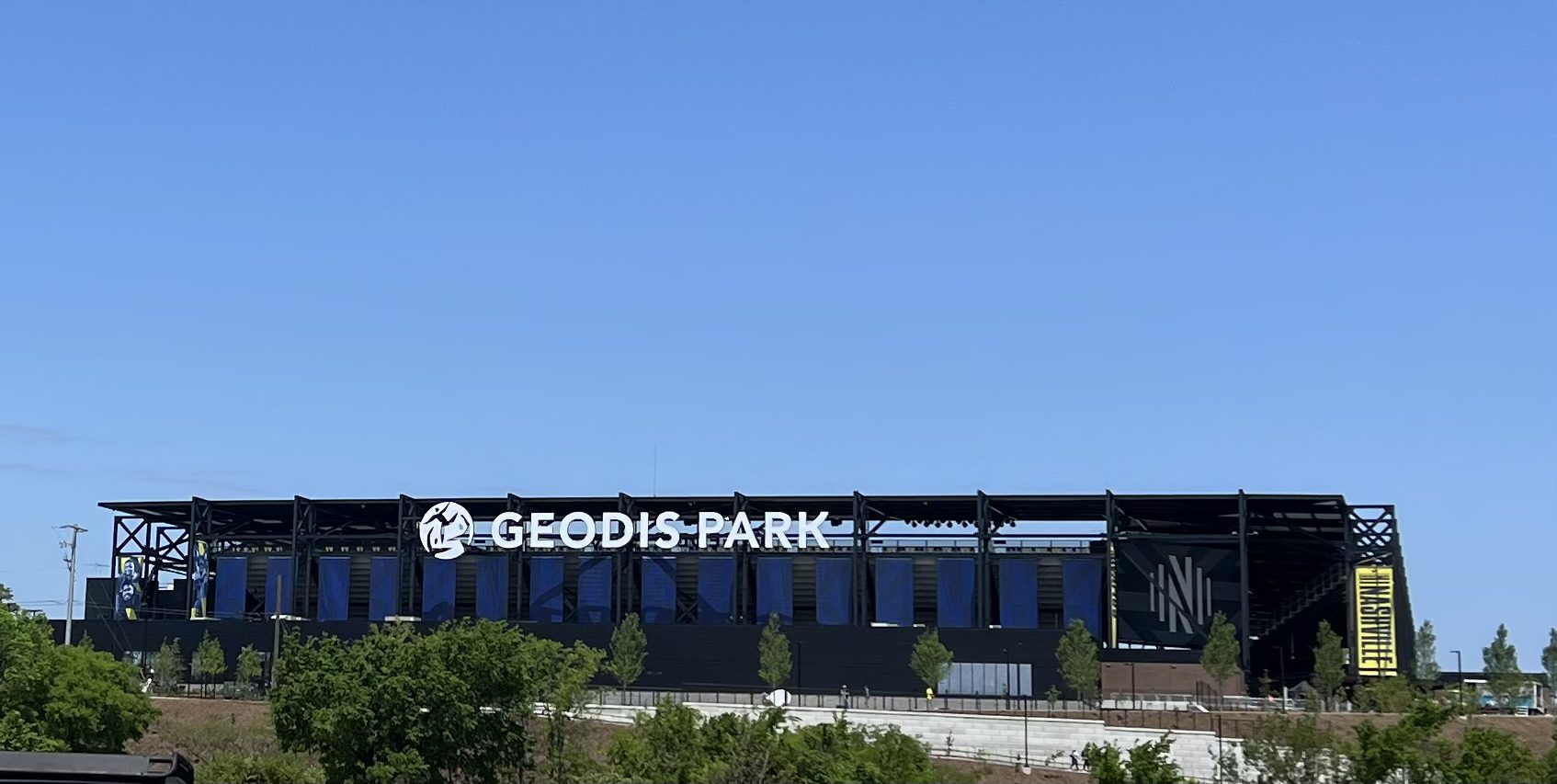
The obvious answer is football. Mackems are back in the Premier League after eight years away, and this summer feels properly earned. A derby double over Newcastle, 1–0 at home, then Brobbey’s 89th-minute winner at St James’ Park to make it 2–1, has the fanbase riding a wave that hasn’t crested yet. Twelfth in the table. Still climbing. The pre-season tour is the first time this squad travels as a top-flight team, and GEODIS Park, the largest soccer-specific stadium in North America at 30,109, is no bad place to start. There’s even a chance Jordan Pickford makes it into the stands — Sunderland’s own, possibly watching from the terraces with his Mackem marras.
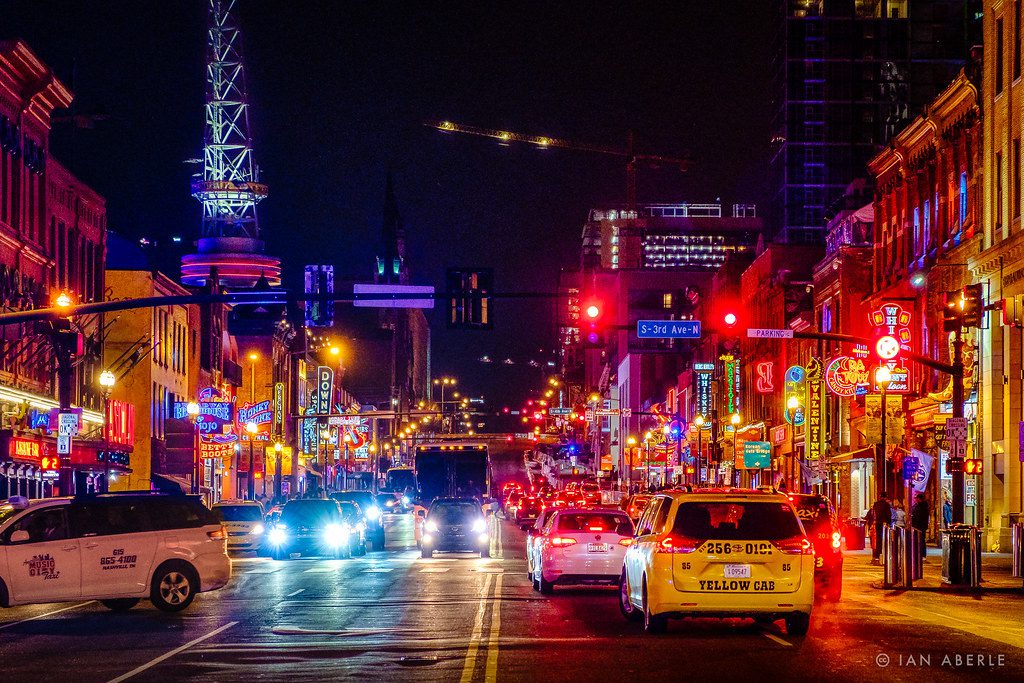
But the less obvious answer is that Nashville doesn’t need football to justify a visit. It’s been America’s fastest-growing city for half a decade, and the music industry that built it hasn’t gone anywhere. The Grand Ole Opry has been running since 1925. The Ryman Auditorium, the Opry’s original home and the “Mother Church of Country Music,” still hosts shows most nights. Lower Broadway runs sixteen hours of live music a day, three hundred and sixty-five days a year, no cover charge, bands playing for tips. The whole strip operates on a business model that would give an accountant palpitations but somehow keeps producing genuinely excellent musicians.
The Essential Experiences
Start on Lower Broadway, but not the way the stag parties do. Walk in around eleven in the morning, before the hen dos arrive, when the honky-tonks are already open and the bands are warming up to half-empty rooms. Robert’s Western World is the one: a boot shop that became a bar, kept the boot shop signage, and now serves the best fried bologna sandwich in Nashville alongside live honky-tonk from performers who’d headline anywhere else. No cover charge. Drinks run $15–21 (£12–17, roughly what you’d pay in a central London pub, except the entertainment is free and considerably better). Tootsies Orchid Lounge, directly behind the Ryman, has been going since 1960. The purple exterior is either charming or alarming depending on your tolerance for decorating choices made under the influence.
RCA Studio B is the essential Nashville music pilgrimage and the one most visitors miss. This is where Elvis recorded “Are You Lonesome Tonight,” where the Everly Brothers cut “All I Have to Do Is Dream,” where Dolly Parton laid down “Jolene.” The studio is preserved exactly as it was — same microphones, same piano, same acoustic tiles — and access is only through a guided tour from the Country Music Hall of Fame ($52.95/£42 for the combined ticket, or $23/£18 as an add-on if you’re already visiting the museum). Tours run hourly, cap at small groups, and last about an hour. The shuttle from the Hall of Fame is included. Book the combined RCA Studio B and Country Music Hall of Fame ticket through Viator — it’s the easiest way to lock in your spot without queuing at the door. Nashville rewards those who go further than Broadway.
The Ryman Auditorium ($34.95/£28 for a self-guided tour, or just buy a show ticket and experience it properly; gig tickets start around $40/£32) deserves an evening. The pews are original. The acoustics are famous for a reason. And the backstage tour lets you stand on the exact spot where Johnny Cash proposed to June Carter on stage in 1968, which is the kind of detail that hits differently in person than on a Wikipedia page.
For football fans specifically: GEODIS Park opened in 2022 and it’s genuinely impressive. Clear bag policy, so leave the rucksack at the hotel. Tickets for the match are available directly from the clubs — Sunderland fans can buy here and Liverpool fans here. Buying through the official club pages keeps the money where it belongs and avoids the secondary market premium.
Hot Chicken and the Art of the Slow Burn
Nashville hot chicken is not a marketing exercise. It started in the 1930s when Thornton Prince’s girlfriend, by most accounts, tried to punish him for a late night out by dousing his morning fried chicken in as much cayenne pepper as she could find. He loved it. Opened a restaurant. Prince’s Hot Chicken Shack is still going, still family-run, and still operating on a pace that suggests urgency is a concept they’ve heard of but chosen to reject. The queue moves slowly. The chicken does not disappoint. A quarter plate runs about $8 (£6.40) — less than a Pret sandwich, for something that’s been perfected over ninety years.
Hattie B’s is the one tourists find first. It’s good. It’s also the most likely to involve a forty-minute queue in the sun, which is a commitment in Tennessee July heat. Bolton’s Spicy Chicken and Fish is the local’s pick. When they say “medium,” they mean what other places call “death wish.” The dry rub instead of sauce is the difference, and it’s significant. Budget $10–15 (£8–12) per person across all three. If you only try one, Prince’s earns the history. If you try all three in a day, you’re braver than Tino Livramento attempting to block Brobbey in the 89th minute, and your digestive system will want a word with you by evening.
The Gulch neighbourhood and East Nashville both reward wandering. The Gulch is polished: converted warehouses, craft cocktail bars, the kind of places where a coffee costs $7 (£5.60, which is London pricing with better weather). East Nashville is scruffier and more interesting: independent record shops, dive bars, the sort of restaurants where the menu changes daily because the chef went to the farmers’ market that morning and made decisions. Both are within a fifteen-minute drive of GEODIS Park.
Getting There and Getting Around
Nashville International Airport (BNA) is eight miles southeast of downtown. The WeGo Bus Route 18 costs $2 (£1.60, genuinely cheaper than a bag of crisps at a service station) and takes about thirty-two minutes. Rideshares run $20–35 (£16–28) depending on traffic and whether the surge-pricing gods are feeling generous. Taxis charge a flat $25 (£20) to downtown plus $1 per extra passenger, which is refreshingly honest by American standards.
For Mackems, search Newcastle Airport to Nashville on Skyscanner — you’ll connect through Heathrow, Dublin, or a US hub, with British Airways, Virgin Atlantic, and Aer Lingus all covering the route. Liverpool fans are best served by Manchester Airport to Nashville, with similar options. July is peak season on both sides of the Atlantic. Book early.
Nashville is walkable downtown but the sprawl beyond Broadway needs a car or rideshare. The July heat averages 33°C, so pace yourself, carry water, and accept that air conditioning will become your most valued companion.
Plan Your Trip
Nashville is one of those cities where a guided experience genuinely adds something, whether that’s a music history walk through the studios and honky-tonks, a backstage tour at the Opry, or a day trip to the Jack Daniel’s Distillery in Lynchburg (about ninety minutes south, and yes, the irony of a distillery in a dry county is exactly as funny as it sounds).
Browse Nashville tours and experiences on Viator — or explore activities below.
If you book through our links, we earn a small commission, most of which goes on hot chicken, and we’re not even slightly sorry about it.
The Song in the Stadium
Here’s what’s going to happen on 25 July. Thirty thousand people will fill GEODIS Park. The Nashville heat will be thick enough to lean on. The teams will come out. And at some point, whether it’s before kick-off or after full-time, a few thousand Mackems who’ve flown four thousand miles for a friendly will start singing. “Wise men say, only fools rush in.” The rest will join. The sound will carry across a city that was built on exactly that kind of devotion — to a song, to a sound, to something you can’t quite explain but couldn’t imagine living without.
Think about Wembley, 24 May 2025. That feeling.
Elvis recorded those words in a Hollywood studio, but Nashville made the man who sang them. RCA Studio B is a ten-minute drive from GEODIS Park. The Grand Ole Opry is fifteen. Lower Broadway, where musicians still play for tips because the music matters more than the money, is twenty minutes on foot.
Mackems understand that. The song’s been ours for years, sung in stadiums that have nothing to do with Nashville and everything to do with the same impulse — you love something, you sing about it, and you don’t stop just because it doesn’t make sense to anyone else. Nashville gets that. It’s been doing it since 1925.
Leave a Reply