
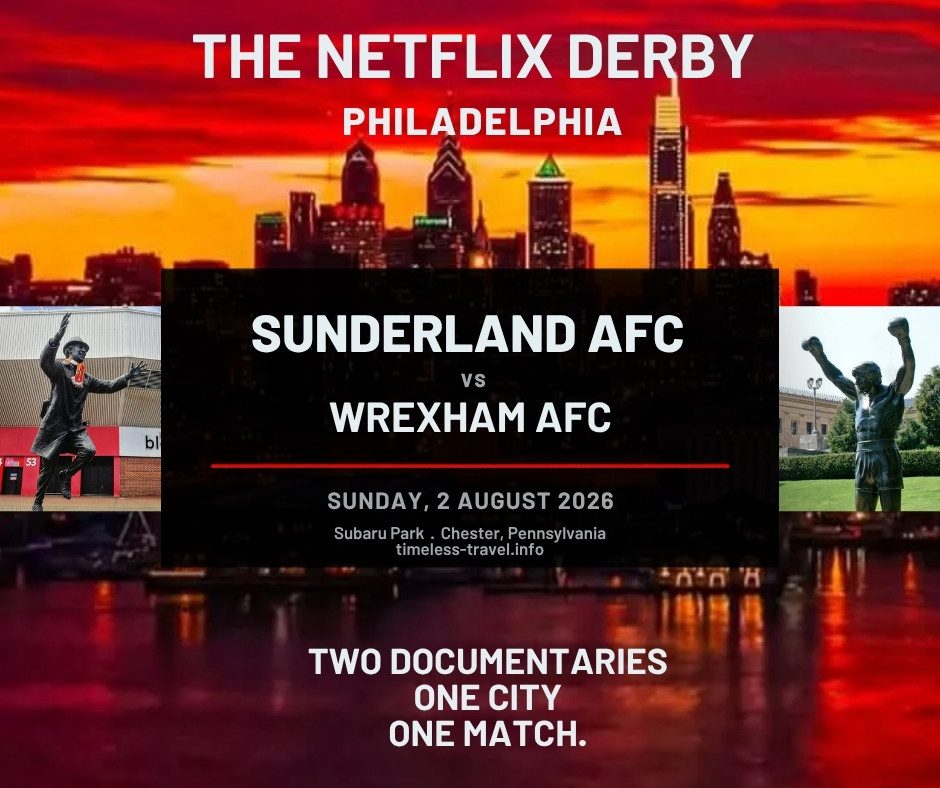
Picture the scene. It’s 2 August 2026, a handful of Sunderland fans are walking through downtown Philadelphia wearing red and white, and someone stops them on the street. “Hey, you guys playing Rocky?” No. They’re playing Wrexham. Owned by Deadpool. In a football stadium on the bank of the Delaware River. As the final match of Sunderland’s first pre-season tour as a Premier League club.
The American doesn’t know what to do with any of this. That’s fine. Mackems have had years of moments that were hard to explain to outsiders.
Here’s the thing about Philadelphia that nobody puts in a travel guide: this city was built by the same kind of people who built Wearside. Irish and Italian immigrants working the docks. Welsh and English miners coming over for the coal. German craftsmen in the glassworks. The steel mills, the shipyards, the factories — all of it running on the same engine that kept Sunderland going for a hundred and fifty years before it didn’t. When the work left Philadelphia, it left the same way it left the North East: fast, and without much ceremony. The difference is Philadelphia made a film about it in 1976, put a statue to a fictional boxer at the top of the museum steps, and called it a civic monument.
Sunderland didn’t get a statue. We got a Netflix documentary. Same story, different medium.
Deadpool Bought a Football Club. Sunderland Made a Documentary. Now They’re Playing Each Other.
Right. The Wrexham situation. Ryan Reynolds — Deadpool, Free Guy, the man who bought Aviation Gin and sold it for considerably more than he paid — and Rob McElhenny purchased Wrexham AFC in 2020 when the club was in the National League. They made Welcome to Wrexham for Disney+. They invested properly. They got promoted. Then again. The documentary followed the club, the fans, the town, the occasionally baffled players adjusting to the idea that their pre-season was now global content.
Here’s what the documentary got right, and it matters: the Wrexham fans who were there before Reynolds showed up are not watching this through a Hollywood lens. They were in the Racecourse Ground when the attendance was four thousand and the catering was a Bovril and a prayer. The streaming audience found Wrexham. The Wrexham fans found Wrexham a long time before that.
Sunderland fans know exactly what that distinction feels like.
Sunderland ‘Til I Die came out in 2018 when the club had just been relegated to League One. It didn’t show a club on the rise. It showed a club in genuine distress — the boardroom chaos, the fans refusing to leave, the resilience that made no logical sense given what was happening on the pitch. The neutrals watched it as drama. The Mackems watched it and thought: yes, that’s right, that’s exactly what it feels like, and we’re still here. Both documentaries are honest about the same things. Both clubs were counting on their fanbases to hold the line while the ownership sorted itself out. The gap is that one club’s owners had a points deduction and a winding-up order, and the other had a Marvel franchise, a gin brand, and a camera crew on speed dial.
Phil Parkinson, the Wrexham manager, was previously at Sunderland. You know what you feel about that chapter. I’m not going to poke it. What matters is he knows what a proper football crowd sounds like, and Subaru Park on 2 August is going to give him one either way.
Why This City Gets It Without Being Told
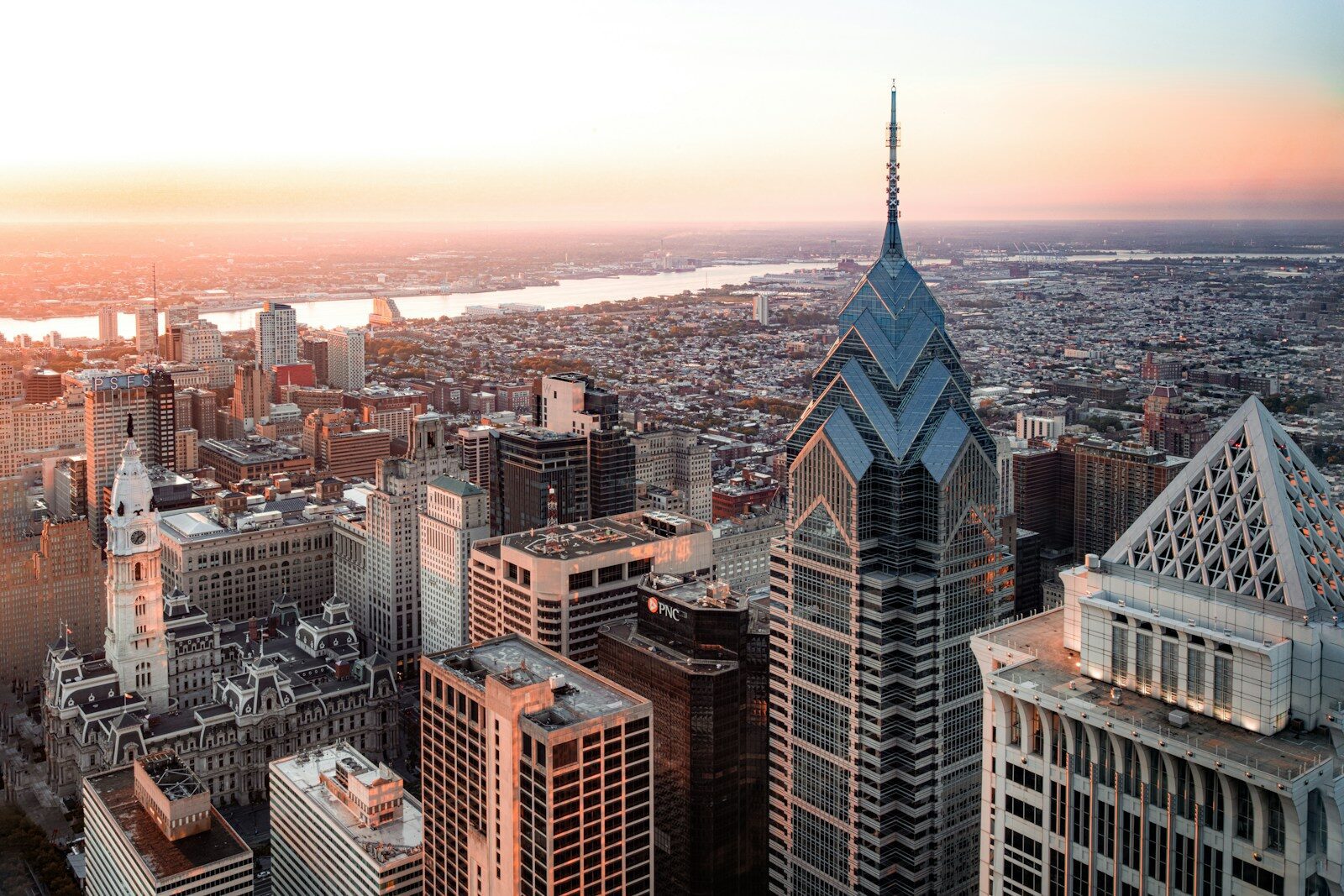
Walk around Philadelphia for a day and something clicks that no travel guide will tell you. This is a city that understands what it means to be overlooked. It built the United States — the Declaration of Independence was signed here, the Constitution was drafted here, the entire founding mythology of America happened in these streets — and then Washington took the capital, New York took the money, and Boston got to be the intellectual one. Philadelphia was left holding the invoice.
The industries that replaced the founding-father era look familiar if you’re from the North East: steel, coal, textiles, glass, shipbuilding on the Delaware River. The same immigrant communities — Irish, Italian, Eastern European — working the same kind of jobs under the same kind of conditions. When deindustrialisation hit in the 1970s and 80s, it hit Philadelphia the way it hit Sunderland: deeply, quickly, and with lasting consequences that a few murals and a lot of resilience haven’t entirely solved.
In 1976, Rocky came out. A film about a small-time boxer from South Philadelphia — broke, living above a pet shop, punching frozen meat in a locker because he can’t afford proper training equipment — who gets an impossible shot at the heavyweight championship. He doesn’t win. He goes the distance. That’s the whole point.
If that doesn’t feel like a Sunderland metaphor wrapped in a film about boxing, you haven’t been paying attention for the last decade.
The city put a statue of Rocky at the top of the Philadelphia Museum of Art steps. Not inside a film archive — at the top of the steps he ran up in the film. A fictional character. A civic monument. Philadelphia looked at Rocky Balboa and saw something true about itself, and about the kind of place that produces that kind of story.
What to Do Before Kick-Off
August in Philadelphia is 29°C with the kind of humidity that makes the air feel like a warm flannel someone’s already used. It’s the sort of heat that would turn a two-day-old pink wafer soggy. Mackems, famously, don’t wear coats in January — T-shirt weather, minus two, no problem, that’s just a normal Saturday in Sunderland. But this isn’t cold you can ignore through sheer stubbornness. Philadelphia in August is heat you have to actually manage, which means: go out early, go out late, and between roughly midday and 5pm treat an air-conditioned museum as the destination, not the backup plan.
The Rocky Steps — and do them before 9am or after 5pm, because midday they’re thirty-seven degrees of exposed stone with a queue of tourists all having the same idea at the same time. Early morning, the light comes up over the Parkway and you’ve got the steps almost to yourself. Run up them. Everyone does. Nobody is as fast as they expected. Every single person stands at the top with their arms raised feeling briefly, embarrassingly, genuinely brilliant about it, and not one of them regrets it. The view earns the cliché: the Benjamin Franklin Parkway below, the fountains, the whole battered city stretched out in front of you. It costs nothing. It takes eight minutes. Go up in your Sunderland shirt, arms raised. There’s a reason for that — and we’ll come back to it at the end.
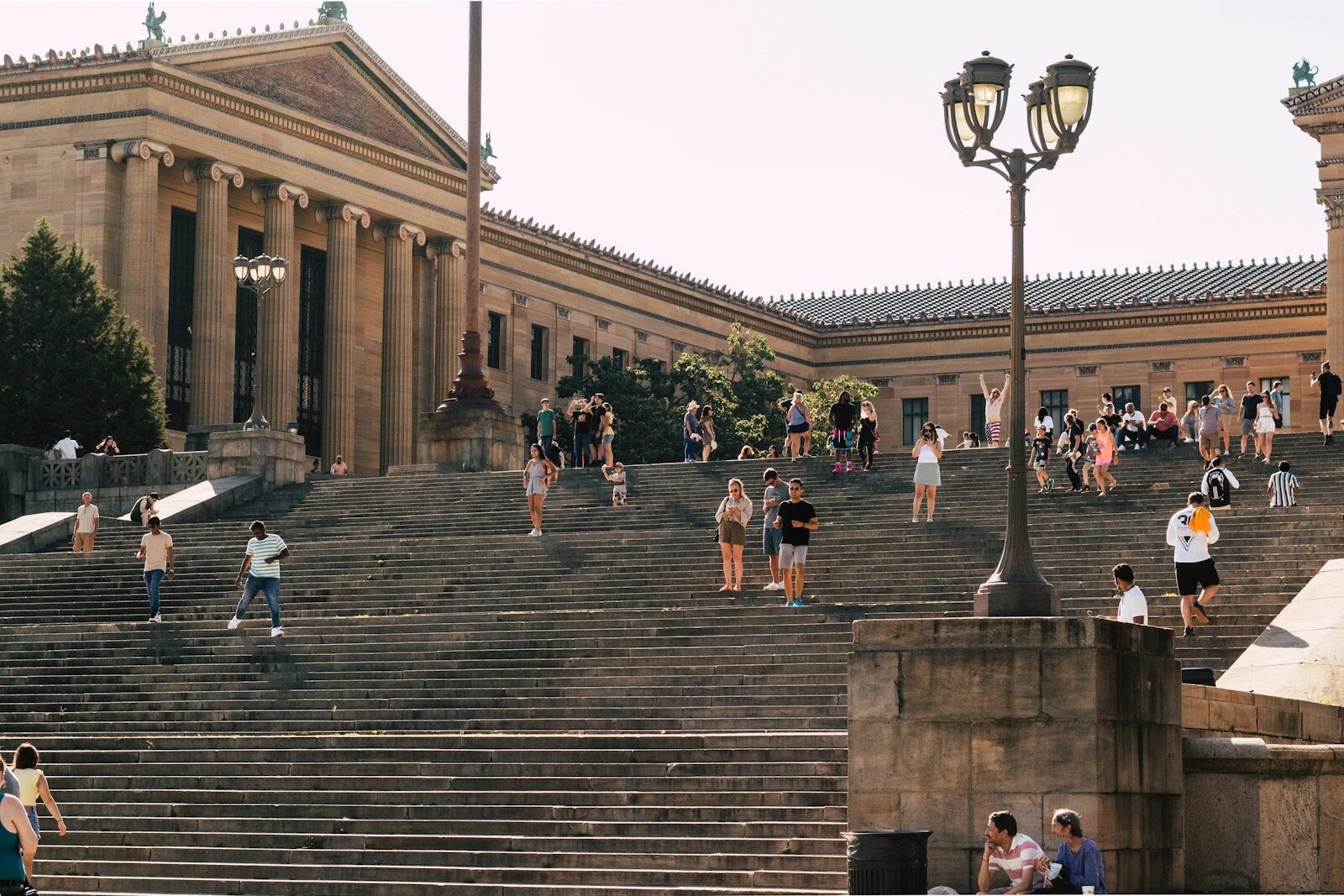
The Philadelphia Museum of Art is right behind you, air-conditioned, and free on Friday evenings (pay what you like, April through September). The Greek Revival building is vast in the way that suggests the architects were compensating for something, which they were, and that’s basically the story of American civic architecture in one building.
Eastern State Penitentiary is the one most people miss and shouldn’t. A Gothic prison — towers, vaulted corridors, cells crumbling deliberately into ruin — that held Al Capone among others, was operational from 1829 to 1971, and has been left in a state of controlled decay that’s more genuinely interesting than any fully preserved museum manages to be. Admission is $21–23 (about £17–18 — what you’d spend on a matchday programme and a hot drink at the Stadium of Light, but considerably more thought-provoking). The audio tour is excellent. You will learn more about 19th-century criminal justice than you planned to before lunch.
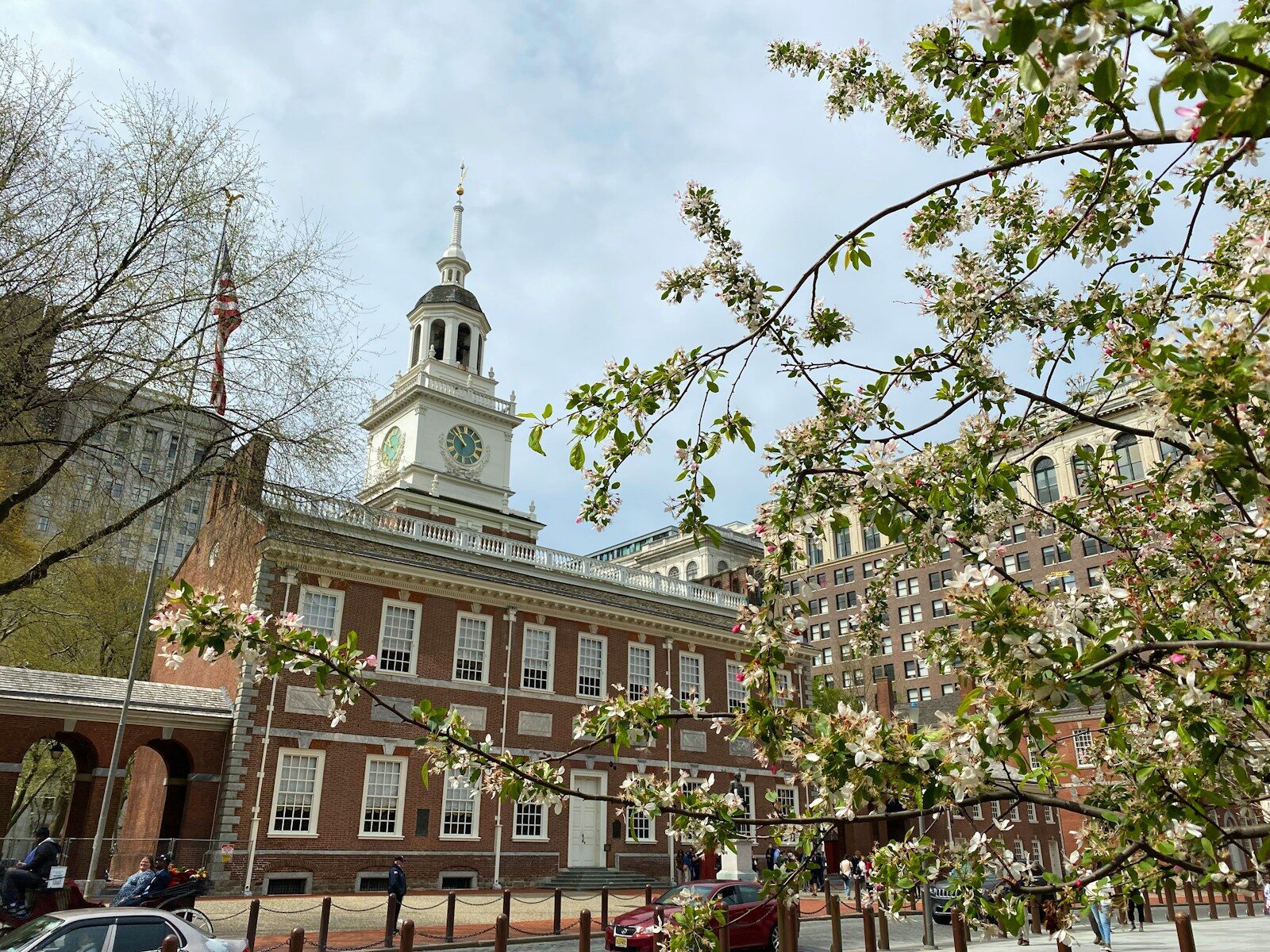
Independence Hall and the Liberty Bell are free, take about two hours together, and deliver exactly what they promise. The room where the Declaration of Independence was signed is modest, wooden, and small — there’s no glass facade, no vanity renovation, no sense that anyone’s tried to make it more impressive than it is. It’s just the room. Which is, frankly, more than you can say for some grounds that have had a lot of money spent on them recently and still managed to feel hollow. The ranger gives you the tour. They’ve done it thousands of times. They remain enthusiastic. The Liberty Bell has a crack in it from being rung too hard, which is so perfectly American that someone has printed it on a T-shirt and is selling it in the gift shop, and honestly fair enough.
Mural Arts walking tours run from $15–25 (about £12–20, cheaper than a Metro return and a coffee back home). Over 4,000 murals cover the walls of Philadelphia, the legacy of a 1984 anti-graffiti scheme that became the largest public art programme in the United States. The North Philadelphia routes show what the city felt in the decades when the work left and the walls went up. It’s not like most walking tours.
Food: A Proper Account
Pat’s King of Steaks (the original, 1930, cash preferred, no frills, exactly as it sounds) and Geno’s Steaks (founded in direct competition three blocks away, slightly flashier, equally committed to the argument) have been having the same cheesesteak debate since 1966. Cost: $14–15 each (about £11–12 — cheaper than a Tesco meal deal on Wearside and considerably more satisfying). You go to both. You pick a side. You commit. That’s the entire ritual and it matters more than the verdict.
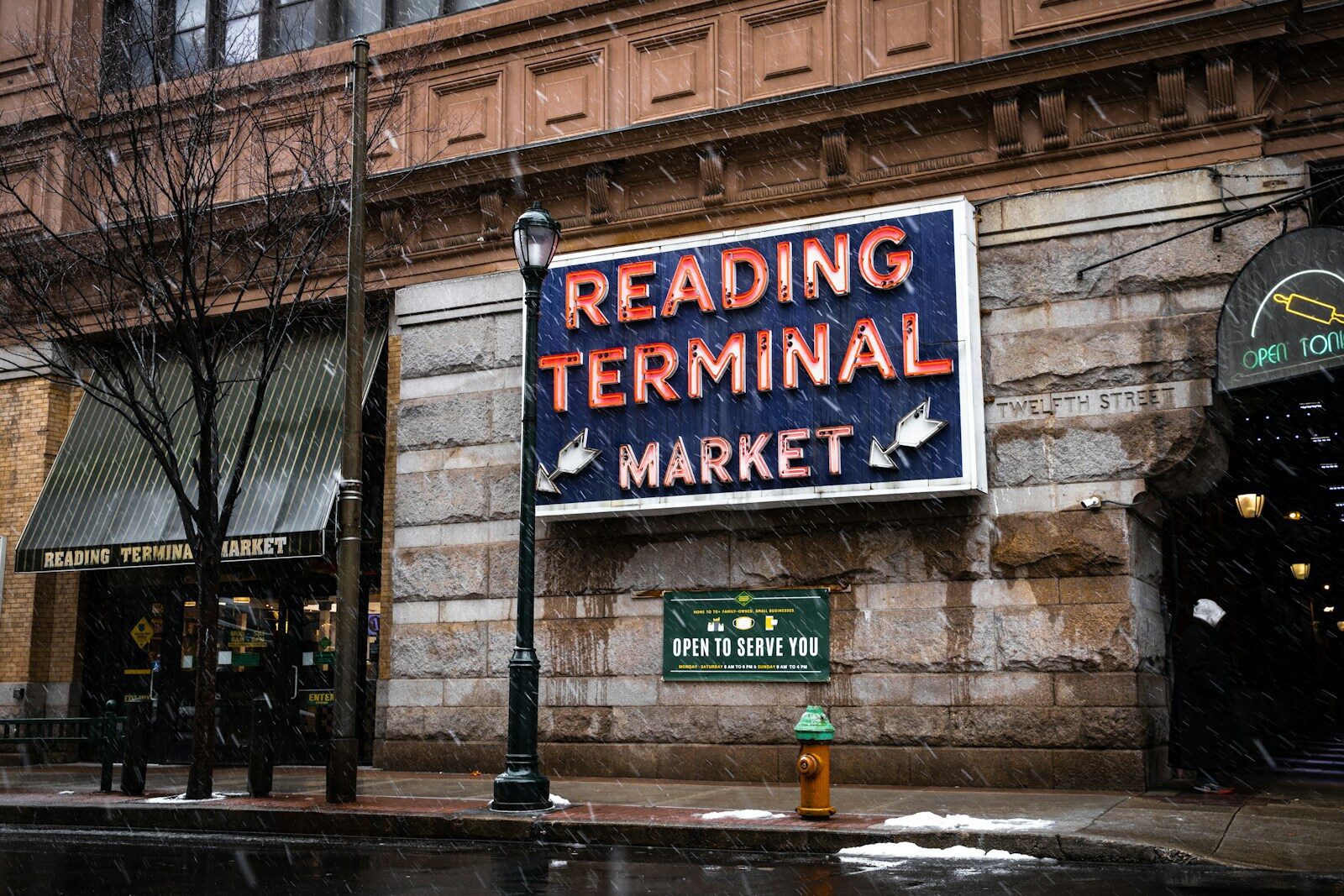
Reading Terminal Market has been running since 1893 and is the more important food stop. Eighty independent traders under one roof — cheesesteak next to Pennsylvania Dutch, Vietnamese pho next to Ethiopian food, Amish bakers next to a proper fishmonger. No branding, no artisan curation, no theme. Just the food culture of a working-class immigrant city that’s been feeding itself this way for over a hundred years. Go early. Go hungry. Have three things.
Wawa is the local convenience chain that Philadelphians treat the way Mackems treat Greggs — with genuine affection and zero irony. Coffee and a soft pretzel before 9am, walking toward the Delaware waterfront. About £4. You will feel entirely correct about this.
Water ice — its own thing, somewhere between a snow cone and a sorbet but committing to neither — is $3–5 (about £2.40–4, less than a bottle of water at a Premier League ground). In the humidity, it is the only rational response to being outside.
Getting There and Getting to the Match
For Sunderland fans: Philadelphia International Airport (PHL) is 11 miles south-west of downtown, 30 minutes on SEPTA Regional Rail for about $8 (roughly £6.40 — less than a taxi from Durham station into the city). From Newcastle Airport, you’ll connect through London Heathrow, Amsterdam, or Dublin — 12–15 hours total, fares from around £1,000–1,500 return at peak August pricing. Book early; this is the pointy end of summer.
For Wrexham fans: Bristol Airport and Cardiff Airport are your most practical departure points, both with connections to Philadelphia via London, Amsterdam, or Dublin. Fares from around £600–1,100 return depending on timing and how much you enjoy a middle seat to Amsterdam at 6am.
Around the city: SEPTA Day Pass is $13 (about £10.40). The historic core is walkable in 20 minutes. After midday in August, taxis and air conditioning become attractive — budget for it.
To the match: SEPTA Regional Rail, Wilmington/Newark Line from Suburban Station to Chester Transit Center. About 30 minutes, $5–7 (roughly £4–5.60 return — less than a pint at the ground). Free shuttle from Chester Transit Center to Subaru Park on match days from four hours before kick-off. Cashless throughout. Subaru Park holds 18,500, sits on the bank of the Delaware River, and is a proper football-specific ground.
Plan Your Trip
Philadelphia rewards guided experiences — the mural routes that explain what was actually happening in the city when each one went up, the Independence Hall deep-dives with the historical context the plaques skip, and the food tours that take you into the Italian Market and the parts of Reading Terminal the signage doesn’t point to. Browse Philadelphia experiences on Viator or explore GetYourGuide’s Philadelphia listings. We earn a small commission if you book through our links, which mostly goes toward the next research trip. Or a cheesesteak. Probably both.
See You at Subaru Park
There are two statues with their arms raised that matter to this post.
One is outside the Philadelphia Museum of Art. Rocky Balboa, bronze, arms up, the city of Philadelphia behind him. A fictional character. A civic monument. The city put it there because Rocky’s story — the working-class kid from a declining industrial neighbourhood who got one shot and went the full distance when nobody thought he’d last three rounds — was true about something real, even if Rocky himself wasn’t.
The other is outside the Stadium of Light in Sunderland. Bob Stokoe, arms raised, coat flying, running across Wembley to reach Jim Montgomery after the 1973 FA Cup final. The moment Sunderland — a second division club — beat Leeds United, a powerhouse of English football at the time. A real man. A real moment. The same posture. The same arms. The same story about a city that wasn’t supposed to win.
Both of them are still standing with their arms up. Neither of them is finished.
That’s what 2 August is. Sunderland AFC — back in the Premier League after eight years — playing Wrexham, built back up by two blokes who believed in something, in a city that has been making the same argument since before any of us were born. The humidity will be extraordinary. The cheesesteak will be worth it. The match will matter more than a pre-season friendly has any right to.
Do the steps in your Sunderland shirt. Arms raised at the top — you know the pose. Rocky earned his moment here. Stokoe earned his at Wembley. Till the end, we earn ours.
Come home with a story that nobody scripted.
Haway the lads. 🔴⚪
Did Nashville first? Our Sunderland in Nashville travel guide has leg one covered. New York? The New York City travel guide has match two.
]]>
Leave a Reply