
I wasn’t expecting the scale. You read about the Assembly Rooms, you see them on screen in Bridgerton, and you think you know what you’re walking into. But the first time I stepped through the doors, it was the height of the ceiling that got me — not the chandeliers, not the proportions, just the sheer vertical reach of a room built in 1771 for the sole purpose of making a thousand people feel important at once. Two and a half centuries later, Netflix set up cameras in this exact space and filmed the ball scenes that launched a global obsession with Regency-era romance. Standing there without the crowds, you can see exactly why they chose it.
Bath didn’t need Bridgerton, though. The city has been pulling visitors since the Romans built a temple over its hot springs nearly two thousand years ago. What the show did was remind people that this small city in Somerset contains one of the most complete collections of Georgian architecture in Britain. Walking its streets doesn’t feel like visiting a museum. It feels like stepping into somewhere the buildings were designed to make you stand a little straighter.
Two Architects, One City, No Agreement
Most Bridgerton location guides skip this entirely, which is a shame, because it’s the thing that makes the city make sense.
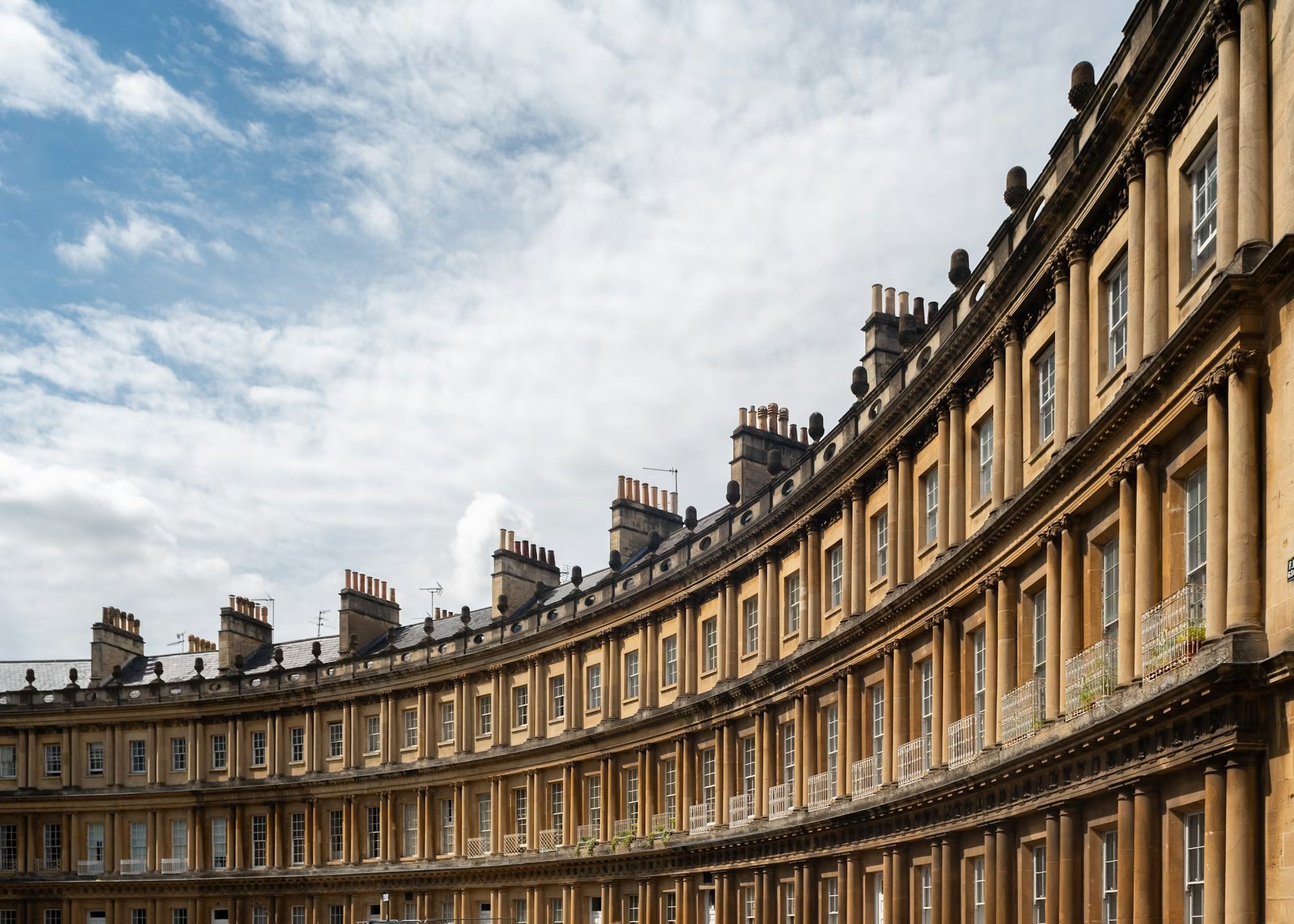
Bath’s most famous buildings were essentially a father-and-son argument carved in stone. John Wood the Elder arrived in Bath in the 1720s with a vision: rebuild the city as a new Rome. He designed the Circus, a circle of townhouses inspired by the Colosseum turned inside out, but died in 1754, three months after construction began. His son, John Wood the Younger, finished the Circus. Then promptly did something his father never imagined. He took the curve and opened it up.
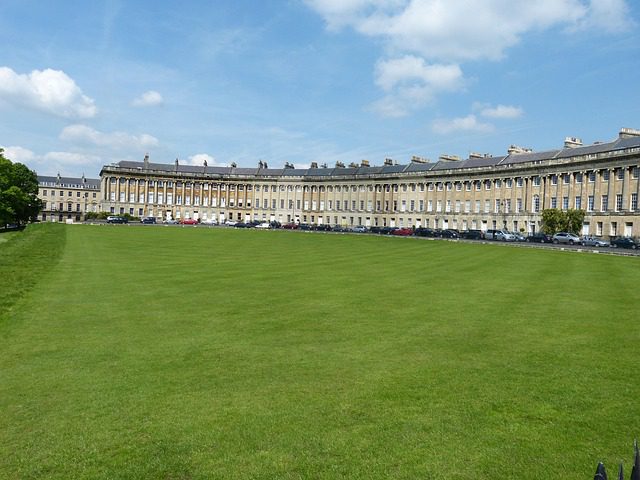
The Royal Crescent, completed in 1774, sweeps 150 metres across a hillside overlooking parkland. Thirty houses, 114 Ionic columns, a unified facade that makes them look like a single palace. Behind that facade, each buyer hired their own architect to build whatever they wanted. The fronts are Georgian perfection. The backs are cheerful chaos. Locals call it “Queen Anne fronts, Mary-Anne backs,” which is about the most English compromise you’ll ever hear.
In Bridgerton, the Crescent doubles as the Featherington family’s London townhouse. No. 1 Royal Crescent is now a museum restored to its 18th-century state (£16 entry, open Tues–Sun 10am–5:30pm, last entry 4:30pm). I’d expected something polished and roped off. Instead, it feels lived-in — the kind of place where you catch yourself wanting to sit down in one of the chairs before remembering you shouldn’t. Stand in front of the full Crescent on a quiet morning and you see why the production team chose it. The curve draws your eye along the entire row. Even an ordinary entrance looks like a procession.
What Bridgerton Actually Borrowed
The show films across more than 70 Bath locations, but the ones worth your time go deeper than a photo opportunity.
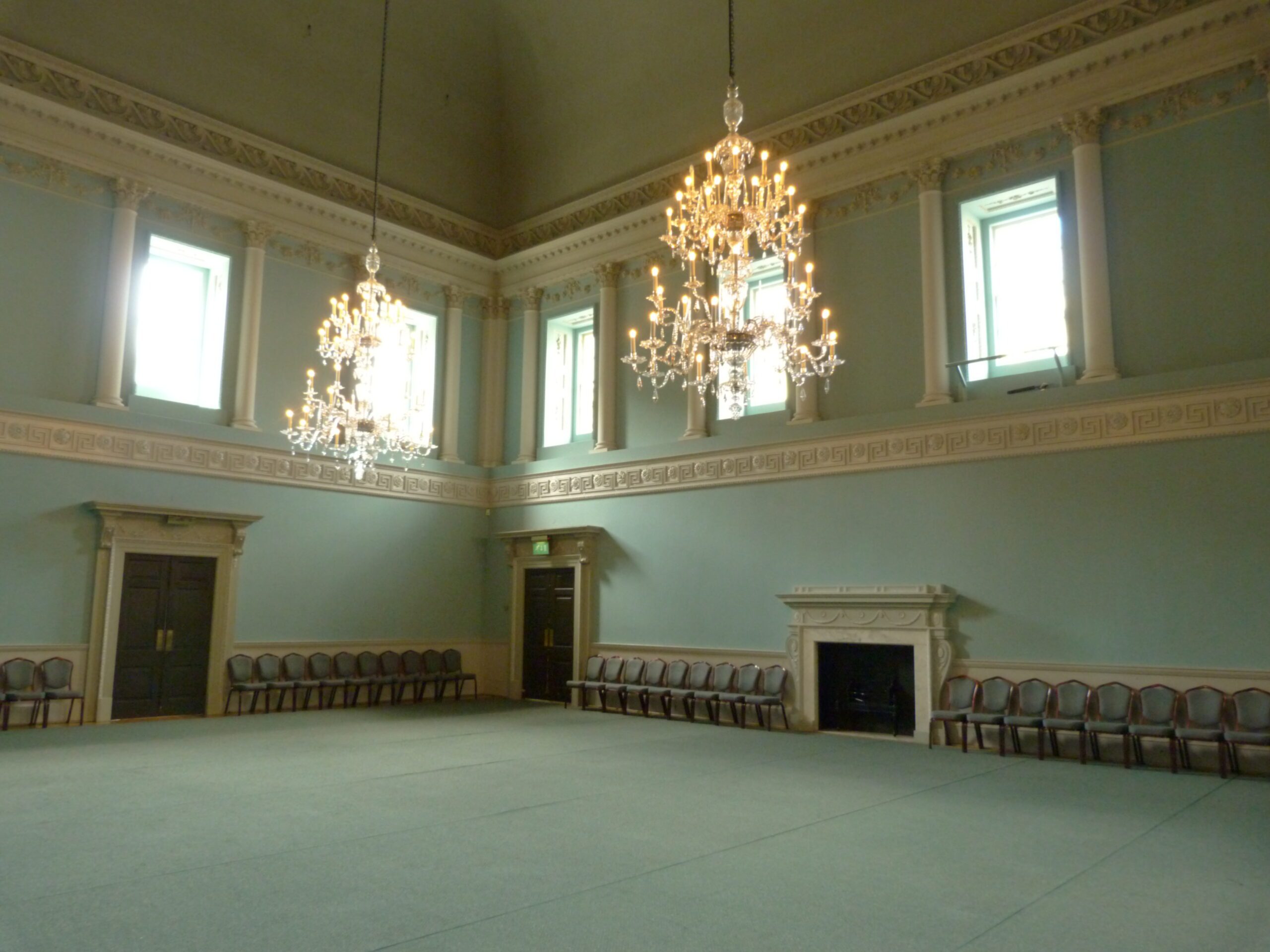
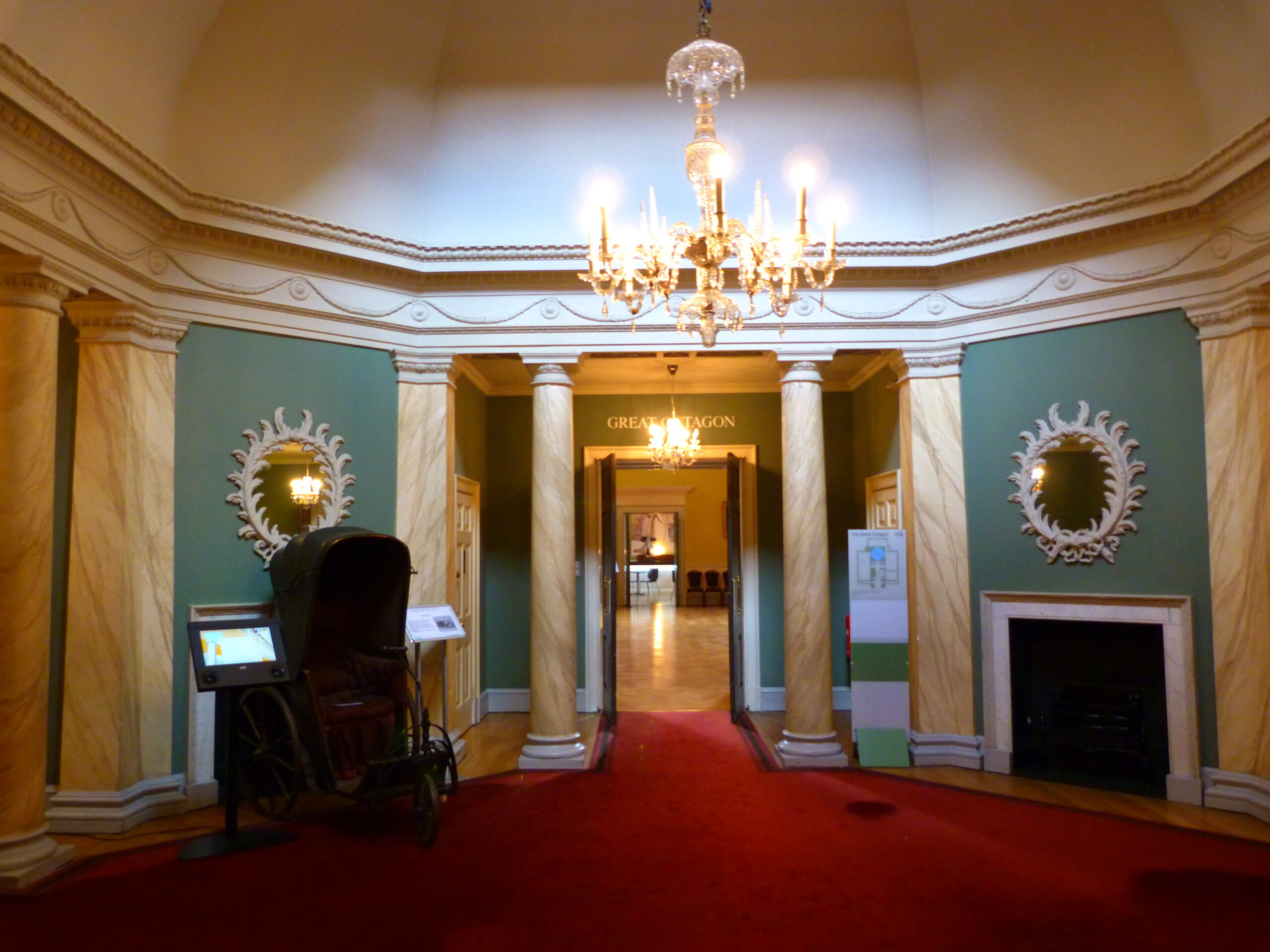
The Assembly Rooms hosted those swirling, candlelit ball sequences where fortunes are made and reputations destroyed over a single waltz. Wood the Younger designed them in 1769. They were bombed during the Bath Blitz in 1942, then painstakingly restored over two decades. The Whitefriars crystal chandeliers that catch the light in the Netflix scenes are the originals — a genuinely remarkable bit of survival. Fair warning, though: the Assembly Rooms closed at the end of February 2026 for a major National Trust renovation. They’re due to reopen in 2027 with a new Georgian immersive experience. Check the National Trust page before you visit, or you’ll be standing outside a hoarding.
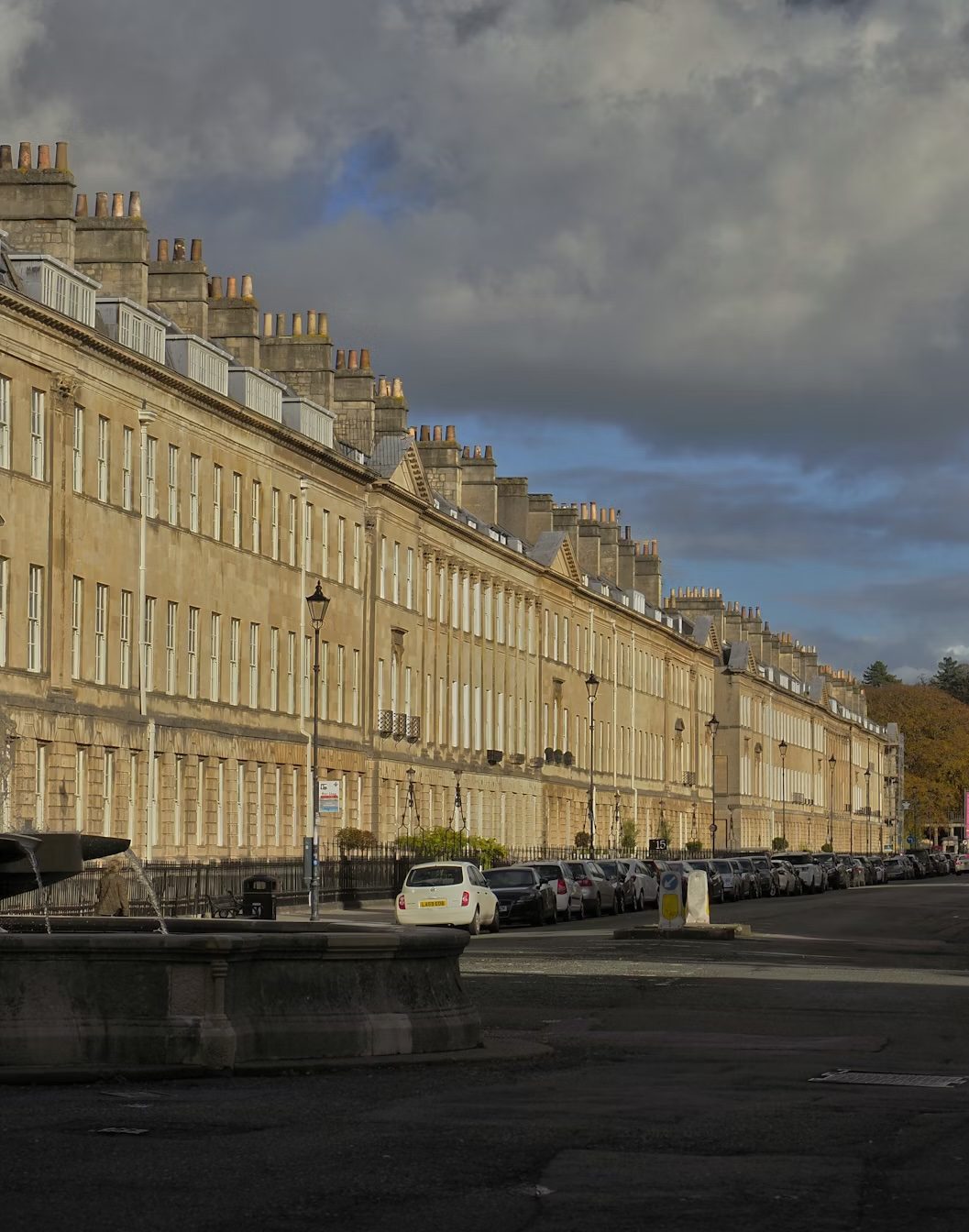
The Holburne Museum, at the end of Great Pulteney Street, plays Lady Danbury’s residence. The building started life as the Sydney Hotel in 1799, a resort for visitors taking the waters, before becoming a museum in 1893. The walk down Great Pulteney Street to reach it is worth the trip alone: a dead-straight boulevard flanked by Georgian townhouses, ending at the museum’s porticoed entrance. On a clear day, the symmetry is almost uncomfortable. You keep expecting something to be slightly off, and nothing is.
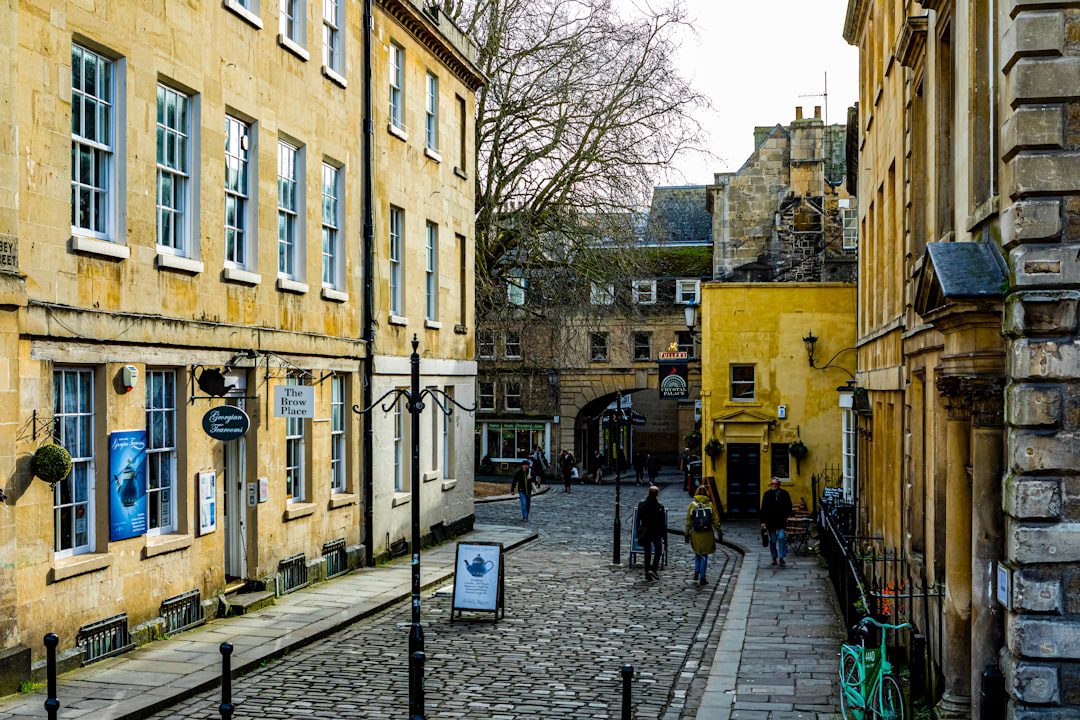
Abbey Green is smaller, quieter, and easy to miss. This cobblestoned square tucked behind the Abbey became the Modiste dress shop in Season 1, where Penelope and her sisters browsed fabrics. The plane tree in the centre is estimated to be over 250 years old — it was standing when the square was being used for exactly the kind of Georgian commerce the show depicts. There’s an excellent independent café on the corner. I made the mistake of arriving mid-afternoon the first time. Get there early enough and you’ll have the place more or less to yourself.
Bath Street, with its colonnades running down both sides, appears in several street scenes. Stripped of modern signage, it passes for 18th-century London without anyone having to try very hard. It’s a 30-second walk from the Roman Baths.
Eating, Drinking, and Sitting Still
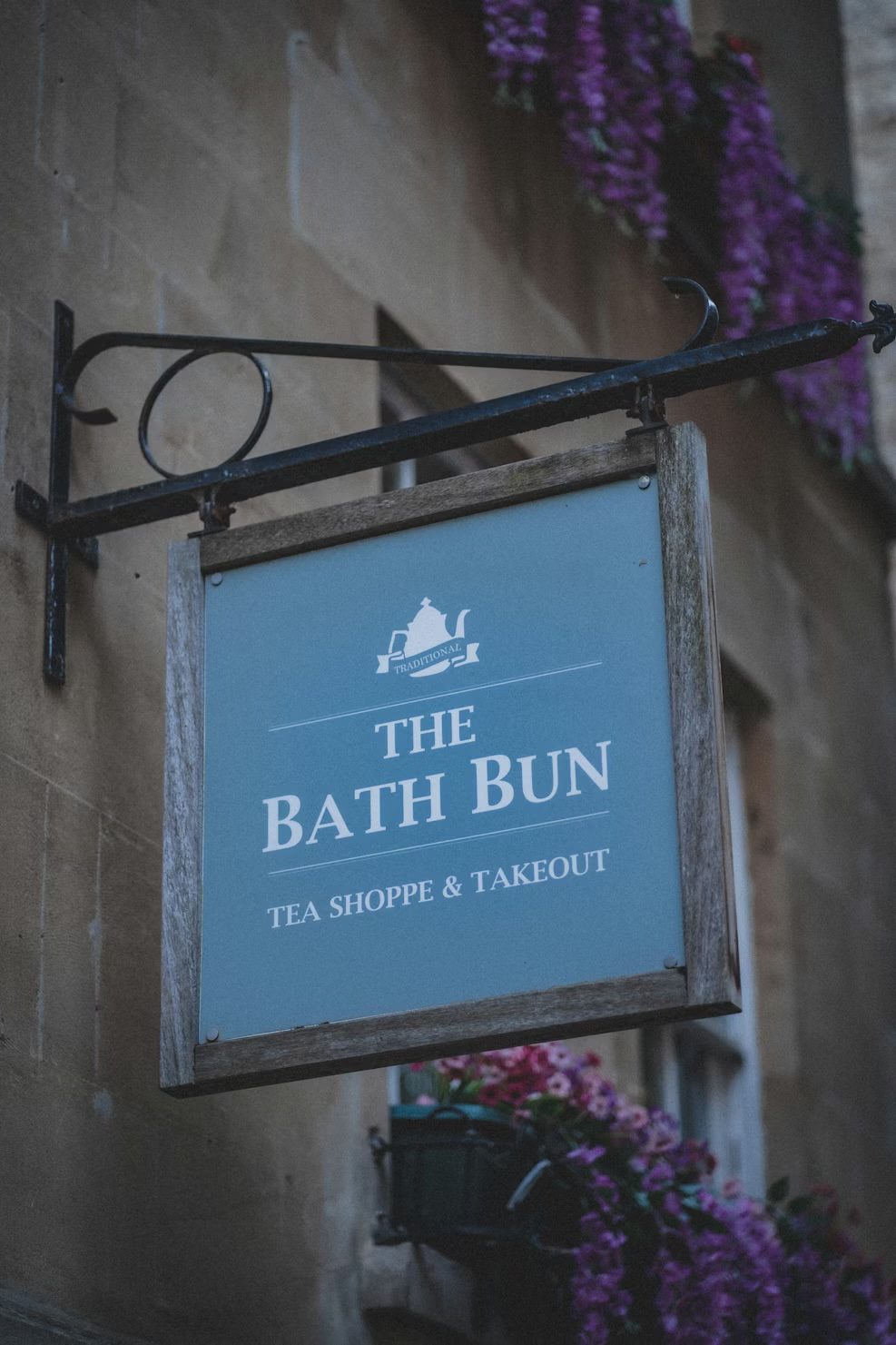
Bath’s food scene has improved enormously in the past decade, and the best of it leans into the city’s scale. This is a place for lingering, not rushing.
Sally Lunn’s, in one of Bath’s oldest houses (built around 1482), serves the famous Bath bun — a brioche-like bread that’s been made on this site since the 1680s. I’ll be honest: it’s very touristy. The queue backs up. The tables are cramped. But the building is genuinely remarkable and the bun is better than you’d expect from somewhere with a gift shop attached. For something less expected, the Circus Restaurant on Brock Street serves modern British food in a restored Georgian townhouse tucked between the Circus and the Royal Crescent. High ceilings, parquet floors, and the kind of quietly stylish room that makes you slow down without realising you’re doing it.
The Thermae Bath Spa, built directly over the ancient hot springs, offers rooftop bathing with views across the city skyline. We went for an evening session when the steam was rising against a darkening sky. Probably the most indulgent thing you can do in Bath, and worth every penny.
Getting There and Getting Around
Bath sits 90 minutes west of London by train (Great Western Railway from Paddington) and around 45 minutes by road from Bristol Airport. The city centre is compact — you can walk from the Royal Crescent to the Abbey in under 15 minutes, so a car is genuinely unnecessary and, given the parking situation, actively annoying. Two full days gives you enough time to cover the Bridgerton locations, the Roman Baths, and a few meals without rushing. A single day works if you’re focused, but you’ll feel it.
April to June or September to October is the sweet spot, when the light is good, the crowds are manageable, and the honey-coloured Bath stone looks its best.
Castle Howard. If you’re a completist, the Duke of Hastings’ estate (Clyvedon Castle in the show) is actually Castle Howard in North Yorkshire, a four-hour drive north (or about the same by train via York). It’s currently closed for Season 5 filming as of spring 2026, with the House, Great Hall, and Temple of the Four Winds all off-limits. Check their site before making the trip. When it is open, the grounds alone are worth the detour. But Bath gives you the concentrated hit, and you won’t need to cross two counties to get it.
Plan Your Trip
A guided Bridgerton walking tour covers the key sites in around two hours and adds the kind of context a solo wander can’t match — behind-the-scenes production details and the real Georgian history the show draws from. Tours start from around £20 per person, which feels reasonable for what you get.
Browse Bridgerton and Bath experiences on Viator or explore guided tours on GetYourGuide.
Timeless Travel uses affiliate links. If you book through our links, we earn a small commission at no extra cost to you.
In Bridgerton, departures from Bath are all carriages and longing glances through rain-streaked windows. Mine was a GWR train from Bath Spa, a coffee from the platform kiosk, and a last look at the hills before the tunnel swallowed the view. Less cinematic, arguably. But the feeling was the same — that this small city had given more than I’d expected, and I was already thinking about when to come back. The Woods, father and son, set out to build a new Rome in Somerset. They got closer than anyone had a right to expect. Bridgerton just pointed the cameras at what was already there.
Leave a Reply